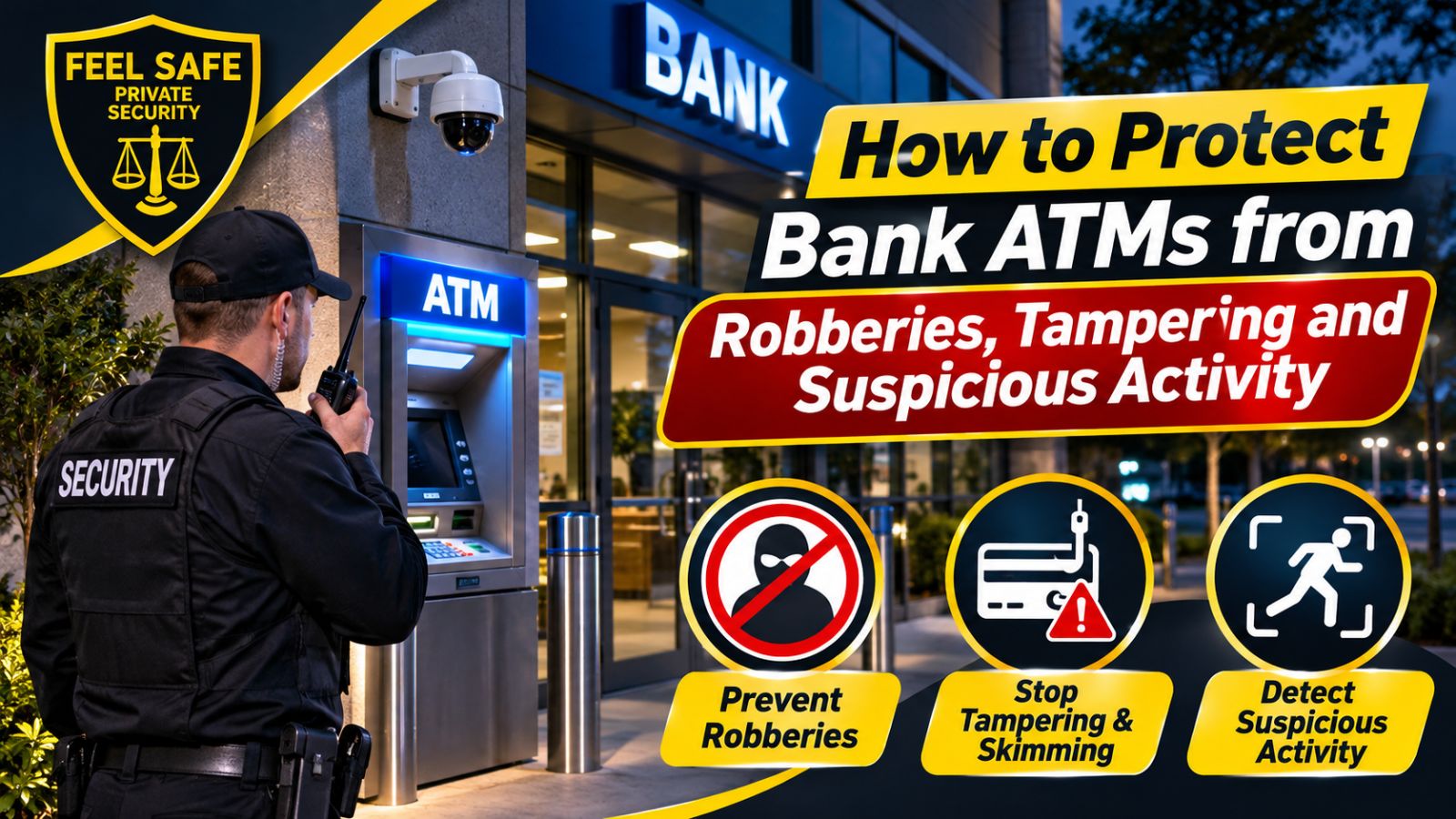
How to Protect Bank ATMs from Robberies, Tampering and Suspicious Activity
Post Date: November 19, 2026, Post By: Admin
A customer stops at an ATM after dark. Within seconds, someone steps up behind them and demands the cash. Down the street, another machine carries a thin skimmer that no one has noticed yet. Both crimes start the same way: an unwatched machine and a criminal who sees an easy target. Learning How to Protect Bank ATMs from Robberies begins when you treat the ATM as part of the branch, not just a box on the wall.
Strong bank security services in California treat every ATM as a risk point that needs trained people, the right technology and clear daily routines.
For high-risk sites, armed bank security guards California branches rely on add a level of deterrence that cameras alone cannot match.
This guide explains the main ATM threats, the layers that stop them and the mistakes that leave machines exposed. It also shows how bank protection services California banks and credit unions use can keep customers safe on every visit.
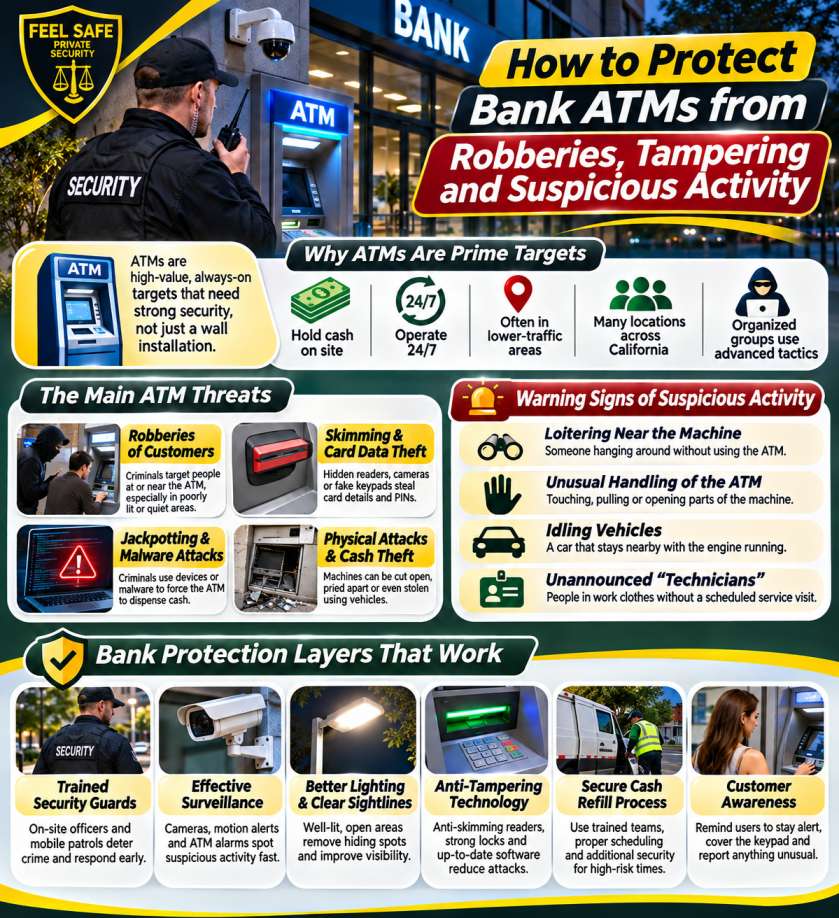
Why ATMs Have Become Prime Targets for Criminals
ATMs hold cash, run around the clock and often sit in quiet spots away from staff. That mix attracts criminals who want money without facing a teller or a guard. Many bank security leaders now see ATM crime as a bigger daily threat than robberies at the counter.
California adds its own pressures. Dense cities, busy freeways and a large number of branches and standalone machines give offenders many choices and fast escape routes. Organized groups have also become more skilled at skimming, jackpotting and physical attacks on machines.
Every attack costs more than the stolen cash. Customers lose trust, staff feel unsafe, and the bank faces repairs, fraud claims and damage to its reputation.
The Main ATM Threats Banks Face Today
Robberies of Customers at the Machine
The most common danger targets people, not machines. Robbers wait near the ATM, watch for someone who withdraws cash and strike as the person walks away. Dark corners, blind spots and empty parking lots make these attacks easier. A customer who gets robbed at your machine often stops trusting your branch, even when the bank did nothing wrong.
Skimming and Card Data Theft
Skimming steals card data without anyone getting hurt. Criminals fit a thin reader over or inside the card slot, add a pinhole camera or a fake keypad, and capture PINs. Some use “shimmers,” which hide inside the card slot and read chip cards. These devices can stay unnoticed for days unless someone checks the machine closely.
Jackpotting and Malware Attacks
In a jackpotting attack, criminals open the upper part of the machine and connect a device or malware that forces it to dispense cash. They often pose as technicians to avoid suspicion. Older software, weak locks and machines that no one checks regularly face the highest risk.
Physical Attacks and Cash Theft
Some groups use cutting tools, pry bars or even vehicles to break into machines or rip them from their base. Others target the moment when crews refill cash. These attacks cause heavy damage and can put staff and passersby in danger.
Warning Signs of Suspicious Activity
- Loitering near the machine: A person who stands nearby without using the ATM, or keeps returning, may be watching for victims or checking a device they installed.
- Unusual handling of the machine: Someone who pulls on the card slot, runs fingers along the edges or opens panels without notice may be fitting or removing a skimmer.
- Idling vehicles: A car that sits nearby with the engine running, especially more than once, can signal a lookout or a getaway driver.
- Unannounced “technicians”: Anyone in work clothes who arrives without a scheduled service visit should be stopped and checked before they touch the machine.
How to Protect Bank ATMs from Robberies: Bank Protection Layers That Work
No single tool stops every ATM crime. The safest machines use several layers that support each other, so a criminal who gets past one still runs into the next.
Trained Security Guards On Site and on Patrol
People remain the strongest deterrent. Many bank security services in California combine on-site officers at busy branches with mobile patrols for drive-up and standalone machines. Officers watch the area, check the machine for tampering and step in early when someone acts suspiciously.
Some sites need more. Branches with heavy cash use, a history of incidents or machines in high-crime areas often choose armed bank security guards California law licenses for that role. Armed officers also protect crews during cash refills, which is one of the riskiest moments in ATM operations.
Bank Surveillance Security That Actually Helps
Cameras only help when they capture useful details. Good bank surveillance security covers the approach path, the user’s face at the screen, the machine itself and the nearby parking area. Live monitoring, motion alerts and vibration or door alarms on the machine turn cameras from a recording tool into an early warning system.
Lighting, Layout and Clear Sightlines
Bright, even lighting removes hiding spots and helps cameras record clear images. Trim bushes, remove clutter and keep sightlines open from the street and the branch. Customers should be able to see who stands near them before they reach the machine.
Anti-Tampering Technology and Machine Hardening
Anti-skimming card readers, encrypted PIN pads, strong locks on the upper cabinet and up-to-date software reduce many attacks. Some banks also use cash cassettes that stain notes with ink if someone forces them open, which makes stolen cash useless.
Customer Awareness for a Secure Banking Environment
A secure banking environment also depends on informed customers. Simple signs remind people to cover the keypad, check the card slot and report anything loose or unusual. When customers know what to look for, they become extra eyes for your security team.
Practical ATM Security Checklist for Branch Teams
Technology works best when people check it every day. Strong bank protection services California teams follow simple routines that catch problems early. Use this checklist as a starting point and adjust it for each machine.
| Task | What to Check | When | Why It Matters |
|---|---|---|---|
| Touch test | Card slot, keypad and fascia for loose or raised parts | Every shift | Finds skimmers and overlays early |
| Camera check | Clear view of the user, machine and approach | Daily | Ensures useful footage after an incident |
| Lighting check | Working lights around the machine and parking area | Daily | Removes hiding spots and helps cameras |
| Area patrol | Loitering, idling vehicles, repeat visitors | Every shift | Spots scouting and robbery setups |
| Technician verification | ID and scheduled visit for anyone servicing the ATM | Every service visit | Stops fake technicians and jackpotting |
| Cash refill protection | Officer presence and a clear area during refills | Every refill | Protects crews at a high-risk moment |
| Incident review | Reports, footage and any changes needed | After any incident | Closes gaps before the next attempt |
Common ATM Security Mistakes and Misconceptions
“Cameras alone will stop crime.” Cameras record what happens, but they rarely stop a robber in the moment. Without people to watch the footage and check the machine, a skimmer can stay in place for days.
“Indoor ATMs are always safe.” Lobby and vestibule machines face fewer street robberies, but criminals still fit skimmers and attempt jackpotting inside. Indoor machines need the same inspection routine as outdoor ones.
“Only big-city machines get hit.” Offenders often target quieter areas because they expect weaker protection and slower response. Suburban and freeway-side machines need a plan too.
“Inspection is the vendor’s job.” Service vendors visit only on schedule. Daily checks by staff and officers catch problems between those visits.
“A guard inside covers the ATM outside.” An officer at the teller line cannot see an exterior machine or its parking area. Outdoor ATMs need patrols, clear camera views or a dedicated post.
Expert Advice From Security Guards in the Field
A Real-World Style Scenario
Picture an officer on a routine evening patrol of a drive-up ATM. During a quick touch test, the officer notices that the card slot sits slightly higher than usual and feels loose. They take the machine out of service, call the branch manager and keep customers away until technicians arrive. The technicians find a skimmer, and the officer’s report and camera notes go to police. One careful check protects many customers from fraud.
Pro Tips for Stronger ATM Protection
- Make the touch test a habit. A quick pull on the card slot and a look at the keypad takes seconds. Officers and staff who do this every shift catch most skimmers before they cause real damage.
- Vary patrol routes and timing. Criminals study routines. When patrols arrive at different moments and from different directions, the machine becomes much harder to target.
- Treat cash refills as high-risk events. Keep the area clear, position an officer with a full view of the crew and watch for anyone who lingers or follows them.
- Write down vehicle and person details. Plate numbers, clothing and repeat visits help police connect incidents. Clear notes turn a vague concern into useful evidence.
- Stay calm and put safety first. If a robbery happens at the machine, protecting lives comes before protecting cash. Officers observe, report and call police rather than taking risks that could escalate violence.
Conclusion: Building Safer ATMs for Every Customer
Knowing How to Protect Bank ATMs from Robberies comes down to layers: trained officers, useful cameras, bright lighting, hardened machines and daily checks. Each layer covers the gaps the others leave behind.
The right bank security services in California match those layers to each machine’s real risk, from quiet lobby ATMs to busy drive-up lanes.
Where cash volume or local crime is high, armed bank security guards California branches trust add strong deterrence and protect crews during cash refills.
Feel Safe Private Security works with banks and credit unions to build bank protection services California customers can feel at every visit. If you are reviewing your ATM security, our team can help you assess each site and plan the right mix of officers and routines.
Frequently Asked Questions
1. How can banks tell if an ATM has a skimmer?
Start with a touch test. Pull gently on the card slot and press around the keypad edges. A skimmer often feels loose, sits higher than the fascia or looks a slightly different color. Check for tiny holes or extra panels above the keypad, which can hide a camera. Officers and staff should do this check every shift, and take the machine out of service right away if anything seems wrong.
2. Do outdoor ATMs need armed security guards?
Not every outdoor ATM needs an armed officer. Machines in well-lit, busy areas with good cameras often do well with regular patrols. Armed coverage makes more sense for high-crime locations, machines with a history of attacks and cash refills. A professional risk assessment looks at local crime, cash volume and layout, then recommends the right level of protection for each machine instead of one setting for every site.
3. What should a customer do if they feel unsafe at an ATM?
Customers should trust their instincts. If someone stands too close, loiters nearby or seems to watch the screen, the customer should cancel the transaction and leave. Banks can help by posting clear safety signs, keeping lighting bright and placing machines where customers can see who is around them. A visible officer or patrol also gives customers the confidence to report anything unusual instead of ignoring it.
4. How do bank security services in California help prevent jackpotting?
Jackpotting needs access to the inside of the machine, so control over who touches the ATM matters most. Security teams verify every technician’s ID and scheduled visit, watch for anyone opening panels without notice and report damaged locks right away. Banks add strong cabinet locks, alarms and updated software. Together, these steps make it much harder for criminals posing as service workers to connect devices or malware to the machine.
5. How often should banks review their ATM security plan?
Banks should review their ATM security plan at least once a year, and right after any incident, machine upgrade or rise in local crime. The review should cover camera views, lighting, patrol routes, refill procedures and staff training. Criminal methods change quickly, especially for skimming and jackpotting. Regular reviews with your security provider keep bank protection services California branches depend on in step with the latest risks.
Book Your Services
Our Blog
- How to Protect Bank ATMs from Robberies, Tampering and Suspicious Activity
- What Does a Security Guard Company Actually Do for a Business?
- Unarmed Security Guards in California: Are They Enough to Protect Your Business?
- Why California Banks Still Need Armed Security Guards in 2026
- How Security Guards Help Prevent Retail Theft and Shoplifting in California
- How Unarmed Security Guards in California Help Prevent Theft and Improve Workplace Safety
- Why Hospitality Businesses Need Professional Security Guards
- Security Solutions for Hotels and Retail Stores
- What to Expect From Rapid Response Security Services in California
- How Rapid Response Security Teams Handle Emergencies
- Security Challenges in Parking Lots and Retail Centers
- Why Shopping Centers Need Professional Security Guards
- How Fast Should a Security Team Respond? A Guide to Rapid Response Security Services in California
- Event Security Planning Guide for Safe Gatherings
- Benefits of Residential Security Guards for Community Safety
- How to Choose the Best Security Guard Company in California
- Why 24 Hour Security Monitoring Is Important for Businesses
- Why Hospitals and Clinics Need Professional Security Services
- Why Apartment Complexes Need Residential Security Guards
- Hospital Security Services in California
- How Commercial Security Guards in California Protect Business Properties
- Top Security Risks in Commercial Buildings and Offices
- Why Nightclubs Need Professional Security Guards
- The Role of Unarmed Security Guards in Workplace Safety
- Armed vs Unarmed Security Guards: Which One Is Right for Your Business
- When Businesses Should Hire Armed Security Guards
- How to Choose the Best Unarmed Security Guard Company in California
- How to Choose the Best Security Guard Company in California
- Why Banks Need Professional Security Guards
- Why Businesses Hire Professional Security Guard Services in California
- Top Security Risks in Commercial Buildings and Offices
- Benefits of Hiring Licensed Security Officers for Businesses
- Top Reasons Businesses Need Armed Security Guards in California
- Why Hiring Professional Security Officers in California Is Essential for Businesses
- What Makes a Professional Security Guard Company in California Reliable?
- Top Benefits of Hiring Armed Security Guards in California
- How Professional Bank Security Guards Prevent Robbery and Fraud
- Why Rely On Event Security Services for Crowd Control at California Events
- Strengthening Community Protection Through Reliable Home Security in Tracy Approaches
- How a Bank Security Officer in Manteca Protects What Matters Most to You
- Why a Private Security Guard Is Essential for Business and Community Safety
- Safe Home Security Stockton – Trusted Protection for Your Family and Property
- Choosing the Right Security Guard Services in Modesto for Your Needs
- Why Our Security Services Tracy Are the First Choice for Local Protection
- Stay Protected With Our Expert Event Security Guards Manteca for Every Occasion
- Top Security Companies Lodi Trusts for Bank and Guard Protection Services
- Protecting What Matters Most with Security Services Stockton You Can Trust
- Improving The Security Of A Shopping Mall
- What To Ask Before Hiring A Security Officer?
- Duties Of An Enhanced Security Officer