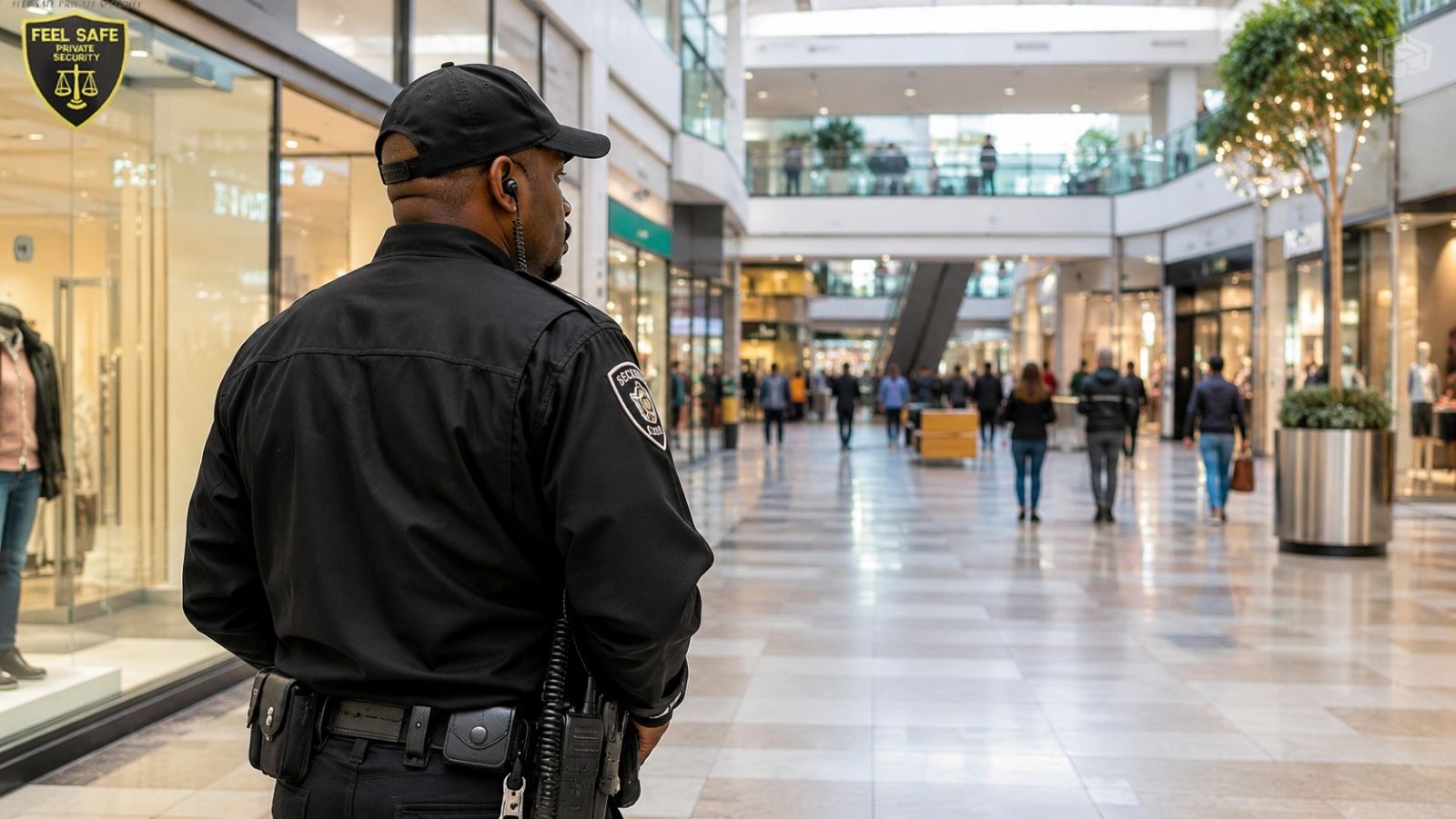
Why Shopping Centers Need Professional Security Guards
Post Date: August 21, 2026, Post By: Admin
Shopping centers are more than collections of stores. They are busy public environments where customers, employees, delivery drivers, contractors, and property managers interact throughout the day. With multiple entrances, parking areas, retail units, loading zones, and common spaces to monitor, maintaining a safe environment requires more than cameras and alarm systems.
This is why shopping center security guards in California play an important role in modern retail property management.
Security personnel provide something technology alone cannot: a visible, human presence capable of observing changing circumstances, communicating with people, responding to incidents, and escalating concerns appropriately. Their role can range from monitoring suspicious activity and assisting with emergencies to supporting retailers with loss-prevention procedures and helping customers feel more comfortable.
For shopping center owners and managers, the objective should not simply be to have someone standing at an entrance. Effective security is about understanding the property’s risks, identifying vulnerabilities, maintaining situational awareness, and responding proportionately when problems occur.
Whether a property is a neighborhood shopping plaza, enclosed mall, outdoor retail center, or mixed-use commercial development, Professional Security Guards can become an important part of a broader safety strategy.
Why Shopping Centers Face Unique Security Challenges
Retail properties experience a constantly changing flow of people. Unlike an office building with controlled access and predictable operating hours, shopping centers are designed to welcome large numbers of visitors.
That openness creates challenges.
A typical shopping center may have:
- Numerous public entrances and exits
- Multiple retail tenants
- Large parking areas
- Restaurants operating late into the evening
- Delivery and loading areas
- ATM locations
- Customer service areas
- Storage and back-of-house spaces
- Employees arriving before and after normal business hours
- High-value merchandise
- Blind spots between buildings or landscaping
- Events that temporarily increase visitor numbers
Security planning therefore needs to account for more than what happens inside an individual store.
An incident in a parking lot can affect customer confidence in the entire property. Likewise, repeated theft at one retailer can become a wider concern for property management.
This broader perspective is one reason retail property protection should be approached at the property level rather than exclusively from an individual-store perspective.
Retail Security: More Than Watching the Doors
Retail security is sometimes misunderstood as simply preventing shoplifting.
In practice, the role is much broader.
Security personnel may monitor common areas, observe unusual behavior, assist with incident reporting, respond to disturbances, support emergency procedures, and maintain communication with property management.
Retail Theft Prevention Security
Retail theft prevention requires awareness rather than simply reacting after merchandise disappears.
For example, security personnel may notice repeated patterns such as:
- Individuals repeatedly entering and leaving without an apparent shopping purpose
- Groups separating to create distractions
- Unusual activity around entrances or emergency exits
- Customers behaving in ways that warrant closer observation
- Vehicles repeatedly stopping in unusual locations
- Activity occurring during vulnerable opening or closing periods
The objective should not be to make assumptions about people based on appearance. Effective security relies on observable behavior, established procedures, and appropriate escalation.
A well-trained guard knows the difference between remaining observant and unnecessarily confronting a customer.
That distinction matters in a public retail environment.
Supporting Retail Employees
Store employees may be trained in customer service and loss prevention, but they should not be expected to handle every security concern themselves.
A visible security presence can give employees a designated point of contact when they encounter a disturbance, suspicious activity, or safety concern.
This can help retailers maintain their focus on serving customers while security personnel handle appropriate security-related responsibilities.
Mall Security: Protecting a Complex Public Environment
Large shopping centers and malls can require particularly coordinated security operations.
A mall may have several floors, entrances, parking structures, food courts, entertainment areas, elevators, escalators, and hundreds of businesses. During weekends, holidays, sales events, and special promotions, visitor numbers can increase substantially.
Mall security therefore involves both prevention and coordination.
Security teams may need to monitor:
- Public corridors
- Entrances and exits
- Common areas
- Parking structures
- Escalators and stairwells
- Food courts
- Service corridors
- Loading areas
- Tenant boundaries
- Event spaces
The challenge is not simply seeing what is happening. It is knowing where attention is most valuable at a particular time.
Example: A Busy Holiday Weekend
Consider a shopping center preparing for a major holiday shopping weekend.
During normal operations, a guard may spend significant time monitoring entrances and common areas. During the event, however, crowd density increases, parking becomes more congested, deliveries may increase, and employees may be working extended shifts.
The security strategy should adapt.
Additional attention might be directed toward:
- Pedestrian congestion
- Vehicle-pedestrian interactions
- Parking-area activity
- Store entrances
- High-traffic corridors
- Emergency access routes
- Lost children or vulnerable visitors
- Customer disputes
- Closing procedures
This illustrates why experienced security planning is dynamic rather than simply following the same routine every day.
Parking Lot Security: An Often-Overlooked Priority
For many shoppers, the parking lot is the first and last part of their shopping experience.
It is also one of the areas where customers may feel most vulnerable, particularly during evening hours.
Large parking areas can contain isolated sections, limited visibility, landscaping, pedestrian crossings, multiple vehicle entrances, and areas that are difficult to observe from inside a building.
This makes parking lot security an important part of shopping center protection.
Parking Area Monitoring
Effective parking area monitoring is not necessarily about watching every vehicle continuously.
Instead, security personnel can focus on patterns and locations where risk is more likely to develop.
Examples include:
- Poorly visible sections
- Pedestrian entrances
- Parking structures
- Areas near loading zones
- ATM locations
- Vehicle access points
- After-hours areas
- Sections with recurring complaints
Visible patrols can also help create a stronger sense of security.
A guard walking or driving through a parking area communicates that the property is actively monitored.
Why Visibility Matters
Security presence can have a preventive function.
Someone considering theft, vandalism, trespassing, or another unwanted activity may reconsider when they see active security personnel.
Visibility is not a guarantee that incidents will never occur. Rather, it is one layer of a broader security strategy.
The best parking security programs combine visibility with communication, observation, reporting, lighting considerations, camera coverage, and clearly defined response procedures.
Customer Safety Security Builds Confidence
Security is not only about preventing financial loss.
Customers want to feel comfortable while visiting a shopping center.
A parent walking through a parking lot with children, an older shopper returning to a vehicle after dark, or an employee leaving after a late shift may all benefit from a visible and approachable security presence.
Customer safety security can involve practical assistance such as:
- Providing directions
- Helping customers locate their vehicles
- Reporting hazards
- Assisting during emergencies
- Responding to disturbances
- Helping coordinate emergency services when appropriate
- Monitoring common areas
- Supporting lost-child procedures
These interactions matter because customers often remember how safe and supported they felt at a property.
Security Guards Are Part of the Customer Experience
A guard should not necessarily be viewed as someone who only responds to problems.
In many successful retail environments, guards become familiar faces.
They may know where certain stores are located, understand the property’s layout, recognize recurring operational issues, and communicate professionally with tenants and visitors.
Approachability is especially important.
A customer who notices a safety issue should feel comfortable approaching security rather than wondering whether reporting it will create an unnecessary confrontation.
Retail Property Protection Requires a Broader View
Shopping center security becomes more effective when property managers consider the entire site.
Retail property protection may include multiple layers:
- Visible security personnel
- CCTV and video monitoring
- Access-control measures
- Lighting
- Alarm systems
- Emergency procedures
- Tenant communication
- Incident reporting
- Environmental design
- Regular security assessments
No single layer should be expected to solve every security problem.
For example, cameras can record an incident, but they cannot physically intervene. A guard can observe and respond, but may not be able to monitor every camera simultaneously.
Combining human judgment with technology creates a stronger system.
Security Technology and Human Observation
Modern surveillance systems can provide valuable information, but technology still requires interpretation.
A camera may show a person entering an area, but a trained security professional can assess the broader context:
- Why are they there?
- Is the behavior unusual for that location?
- Is there an active complaint?
- Is there a potential safety issue?
- Does the situation require intervention?
- Should management or emergency services be contacted?
Technology provides information.
People provide context and judgment.
How Security Guards Help With Retail Theft Prevention
Retail theft can have a significant effect on individual stores and, over time, the overall shopping center environment.
A thoughtful security strategy focuses on prevention, observation, documentation, and appropriate response rather than aggressive confrontation.
Practical Theft-Prevention Measures
Security personnel can support property-wide theft prevention by:
- Maintaining visibility around high-risk areas
- Monitoring entrances and exits
- Communicating concerns with authorized store personnel
- Watching for recurring behavioral patterns
- Conducting routine patrols
- Documenting incidents accurately
- Reviewing recurring problem areas with management
- Supporting established emergency and incident procedures
The exact responsibilities should be clearly defined between the security provider, property manager, and individual tenants.
This is especially important in multi-tenant properties where responsibilities can otherwise become unclear.
The Importance of Professional Communication
Security work involves people.
A guard may encounter an upset customer, a tenant employee, a suspected shoplifter, a delivery driver, a trespasser, or someone experiencing an emergency.
Communication skills therefore matter just as much as observation.
A professional approach generally involves:
- Remaining calm
- Listening before responding
- Avoiding unnecessary escalation
- Following established procedures
- Communicating clearly
- Documenting relevant facts
- Requesting additional assistance when necessary
- Understanding the limits of one’s authority
This is one of the reasons choosing retail security guards California property managers can trust should involve more than comparing hourly rates.
Training, supervision, communication, appearance, reliability, and understanding of the assignment all influence the quality of the security operation.
Common Mistakes Shopping Centers Make With Security
Mistake 1: Treating security as a static assignment
A property may have completely different risks at 10 a.m. compared with 10 p.m.
Security coverage should reflect operating hours, traffic patterns, events, tenant schedules, and known problem areas.
Mistake 2: Focusing exclusively on retail stores
A guard stationed inside a store may miss problems developing in the parking area, loading zone, or common areas.
Shopping center security should consider the entire property.
Mistake 3: Relying entirely on cameras
CCTV is valuable, but cameras are not a substitute for every human security function.
They cannot provide a reassuring presence to customers or physically patrol a parking lot.
Mistake 4: Ignoring tenant communication
Retail tenants see different aspects of the property every day.
A good communication process allows management and security teams to identify recurring concerns rather than treating every incident as an isolated event.
Mistake 5: Measuring security only by arrests or incidents
A low incident count does not automatically mean a security program is successful.
Preventive visibility, timely reporting, customer assistance, hazard identification, and reduced recurring problems can also be meaningful indicators.
Expert Tips for Choosing Shopping Center Security
Property managers evaluating shopping center security guards in California should consider the following.
Define the assignment clearly
Before hiring a security provider, document what the guards are expected to do.
For example:
- Patrol parking areas
- Monitor common areas
- Check entrances
- Support tenant communication
- Conduct opening or closing patrols
- Respond to disturbances
- Document incidents
- Monitor specified locations
Clear expectations reduce confusion later.
Identify the property’s actual risk points
Do not simply copy another shopping center’s security plan.
Review the site’s specific characteristics.
Where do customers report problems? Which areas have poor visibility? When is the property busiest? Which tenants have recurring concerns? Are there isolated parking areas?
Security should respond to actual conditions.
Evaluate reporting procedures
Incident reports should be factual, organized, and useful.
Property managers need enough information to understand:
- What happened
- Where it happened
- When it happened
- Who was involved, where appropriate
- What actions were taken
- Who was notified
- Whether follow-up may be required
Good documentation can help identify patterns over time.
Consider coverage beyond peak retail hours
Security problems do not necessarily follow store opening hours.
Early mornings, evenings, closing periods, weekends, and delivery windows may create different vulnerabilities.
Coverage should reflect the property’s complete operating cycle.
Are Retail Security Guards Worth the Investment?
The value of security should be considered beyond the immediate cost of hiring personnel.
A security program can contribute to:
- Reduced vulnerability
- Improved customer confidence
- Faster identification of problems
- Better incident documentation
- Support for retail tenants
- Improved parking-area visibility
- More organized emergency response
- Stronger property management oversight
No reputable security provider should promise that security guards will eliminate every incident.
That would be unrealistic.
The more credible goal is to reduce preventable risk, improve situational awareness, support a safe environment, and provide an appropriate response when incidents occur.
For many shopping centers, that makes professional security a practical component of responsible property management.
Conclusion:
Shopping center security is not simply about responding when something goes wrong. It is about creating an environment where potential problems can be identified early, customers know where to seek assistance, tenants have a reliable security contact, and property managers have better visibility into what is happening across the site.
The need for shopping center security guards in California is particularly understandable in properties with large parking areas, multiple tenants, extended operating hours, and high visitor traffic.
From retail theft prevention security to parking area monitoring, customer assistance, incident documentation, and property-wide awareness, security guards can provide an important human layer alongside cameras, alarms, lighting, and other safety measures.
The most effective programs are not built around fear or unnecessary confrontation. They are built around preparation, professionalism, observation, communication, and proportionate response.
For shopping center owners and managers considering Professional Security Guards, the best starting point is a practical assessment of the property: understand where vulnerabilities exist, when they are most likely to occur, and what type of security presence would genuinely improve the environment.
Feel Safe Private Security can help property managers approach that process with a focus on practical security needs, professional conduct, and dependable on-site support.
Frequently Asked Questions
1. What do shopping center security guards typically do?
Responsibilities vary according to the property and assignment. Common duties may include patrols, monitoring common areas and parking lots, observing suspicious activity, assisting customers, documenting incidents, supporting emergency procedures, and communicating with property management and tenants.
The scope should be clearly established before the assignment begins. Security personnel should also operate within applicable laws, site procedures, and the authority provided by their role.
2. Do shopping centers need security in parking lots?
Parking areas deserve consideration because they are often spread across large spaces and may have isolated sections or reduced visibility, particularly after dark.
Parking lot security guards California shopping centers use may conduct visible patrols, monitor activity, assist customers with appropriate requests, identify hazards, and report suspicious or concerning behavior.
The right level of coverage depends on the property’s size, hours, traffic, layout, history, and specific risk factors.
3. Can security guards prevent retail theft?
Security guards cannot guarantee that theft will never occur, but they can contribute to theft prevention through visibility, observation, communication, and appropriate response.
The strongest approach usually combines trained personnel with store-level loss-prevention procedures, surveillance technology, good lighting, tenant communication, and accurate incident documentation.
4. How can security guards improve customer safety?
Security personnel provide a visible point of assistance when customers encounter safety concerns.
They may help with directions, report hazards, respond to disturbances, assist during emergencies, and help customers communicate concerns to property management or emergency responders when appropriate.
A professional and approachable presence can also increase customers’ confidence in the shopping environment.
5. What should a property manager consider when hiring a security company?
Start by evaluating the company’s experience with comparable properties, guard training, supervision, communication procedures, reporting practices, scheduling reliability, and understanding of the assignment.
Ask potential providers how they would assess your property’s risks rather than accepting a generic security plan.
The best arrangement is one where responsibilities, patrol expectations, reporting requirements, escalation procedures, and communication channels are clearly understood by everyone involved.
Book Your Services
Our Blog
- Why Hospitality Businesses Need Professional Security Guards
- Security Solutions for Hotels and Retail Stores
- What to Expect From Rapid Response Security Services in California
- How Rapid Response Security Teams Handle Emergencies
- Security Challenges in Parking Lots and Retail Centers
- Why Shopping Centers Need Professional Security Guards
- How Fast Should a Security Team Respond? A Guide to Rapid Response Security Services in California
- Event Security Planning Guide for Safe Gatherings
- Benefits of Residential Security Guards for Community Safety
- How to Choose the Best Security Guard Company in California
- Why 24 Hour Security Monitoring Is Important for Businesses
- Why Hospitals and Clinics Need Professional Security Services
- Why Apartment Complexes Need Residential Security Guards
- Hospital Security Services in California
- How Commercial Security Guards in California Protect Business Properties
- Top Security Risks in Commercial Buildings and Offices
- Why Nightclubs Need Professional Security Guards
- The Role of Unarmed Security Guards in Workplace Safety
- Armed vs Unarmed Security Guards: Which One Is Right for Your Business
- When Businesses Should Hire Armed Security Guards
- How to Choose the Best Unarmed Security Guard Company in California
- How to Choose the Best Security Guard Company in California
- Why Banks Need Professional Security Guards
- Why Businesses Hire Professional Security Guard Services in California
- Top Security Risks in Commercial Buildings and Offices
- Benefits of Hiring Licensed Security Officers for Businesses
- Top Reasons Businesses Need Armed Security Guards in California
- Why Hiring Professional Security Officers in California Is Essential for Businesses
- What Makes a Professional Security Guard Company in California Reliable?
- Top Benefits of Hiring Armed Security Guards in California
- How Professional Bank Security Guards Prevent Robbery and Fraud
- Why Rely On Event Security Services for Crowd Control at California Events
- Strengthening Community Protection Through Reliable Home Security in Tracy Approaches
- How a Bank Security Officer in Manteca Protects What Matters Most to You
- Why a Private Security Guard Is Essential for Business and Community Safety
- Safe Home Security Stockton – Trusted Protection for Your Family and Property
- Choosing the Right Security Guard Services in Modesto for Your Needs
- Why Our Security Services Tracy Are the First Choice for Local Protection
- Stay Protected With Our Expert Event Security Guards Manteca for Every Occasion
- Top Security Companies Lodi Trusts for Bank and Guard Protection Services
- Protecting What Matters Most with Security Services Stockton You Can Trust
- Improving The Security Of A Shopping Mall
- What To Ask Before Hiring A Security Officer?
- Duties Of An Enhanced Security Officer