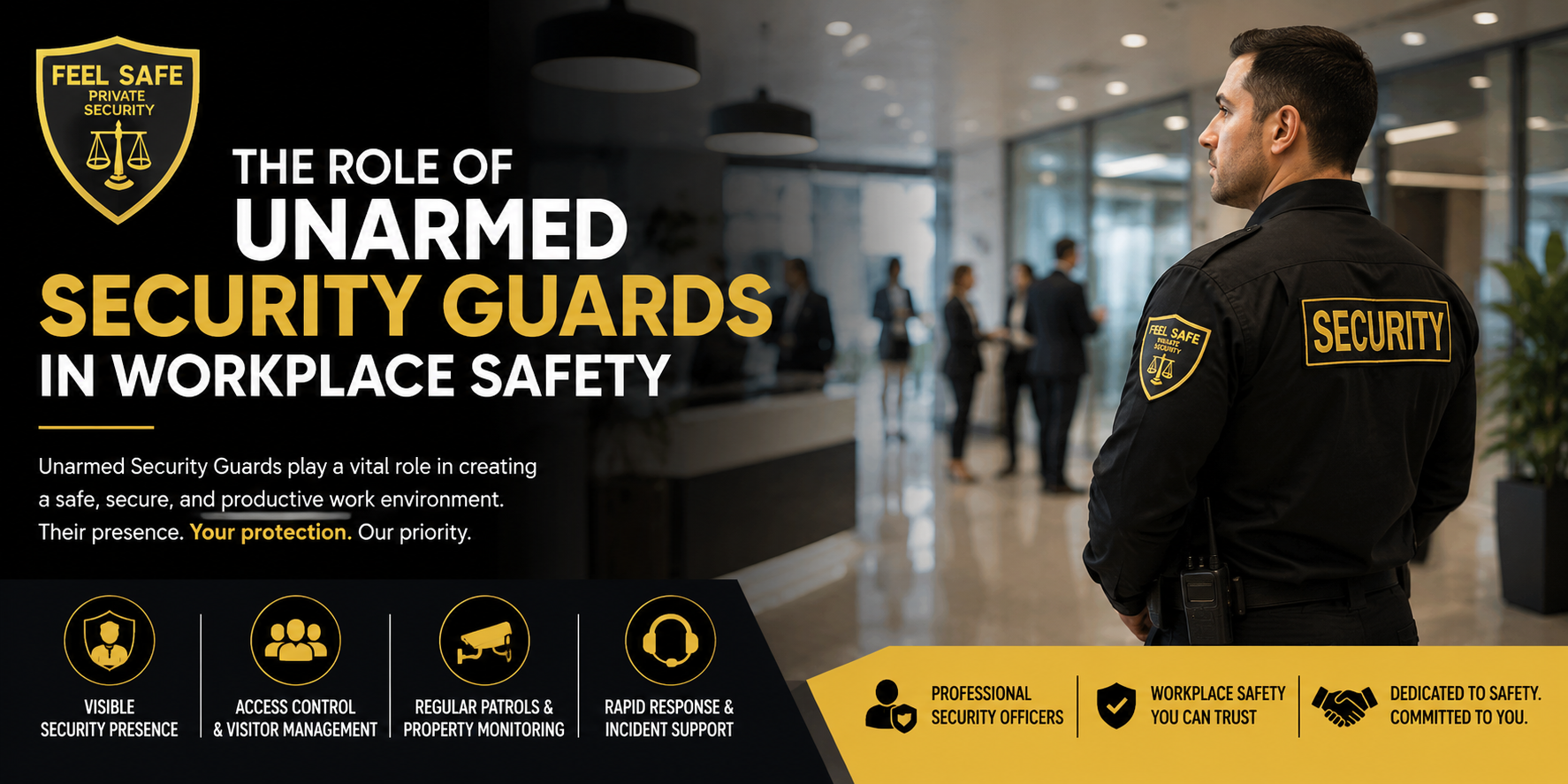
The Role of Unarmed Security Guards in Workplace Safety
Post Date: May 15, 2026, Post By: Admin
Workplace safety is no longer limited to fire alarms, access badges, and surveillance cameras. Businesses today face a wide range of security concerns, from unauthorized access and theft to employee conflicts and visitor management challenges. As organizations seek effective ways to maintain safe environments without creating an intimidating atmosphere, unarmed security guards in California have become an increasingly valuable part of workplace safety strategies. Their ability to provide a professional presence, monitor daily activities, and respond to incidents helps organizations create secure, productive, and welcoming environments for employees, visitors, and customers alike.
Understanding the Growing Importance of Unarmed Security Guards
The modern workplace has evolved significantly over the last decade. Businesses now operate in diverse environments that include office buildings, healthcare facilities, educational institutions, warehouses, retail centers, and corporate campuses. While each setting has unique security requirements, they all share a common goal: protecting people and property while maintaining a positive atmosphere.
This is where Unarmed Security Guards play a critical role. Unlike armed personnel who may be reserved for higher-risk environments, unarmed officers focus on prevention, observation, communication, and rapid response. Their presence often serves as a deterrent while helping organizations maintain a professional and approachable security posture.
Many companies find that unarmed personnel effectively address everyday security concerns without creating unnecessary tension among employees or visitors. Their visibility contributes to safety while supporting a comfortable workplace culture.
Unarmed Security and Modern Workplace Protection
Why Unarmed Security Remains Effective
A common misconception is that security effectiveness depends solely on weapons or force. In reality, successful workplace protection often relies on prevention, awareness, communication, and consistent monitoring. Effective unarmed security personnel are trained to identify suspicious behavior, manage access points, document incidents, and intervene appropriately before situations escalate.
For many workplaces, security incidents involve unauthorized access, workplace disputes, theft prevention, visitor management, or emergency response coordination. These situations often require professionalism, observation skills, and sound judgment rather than physical force.
Creating a Safe and Welcoming Environment
One of the greatest advantages of unarmed officers is their ability to create a reassuring presence without appearing intimidating. Employees are often more comfortable approaching security personnel when they view them as accessible and supportive. This increased interaction can improve incident reporting and strengthen overall workplace awareness.
Organizations that prioritize both safety and positive workplace culture frequently benefit from this balanced approach.
Security Officers as the First Line of Prevention
Monitoring Daily Workplace Activities
Professional security officers play an essential role in monitoring routine activities throughout a facility. Their responsibilities often include verifying visitor access, conducting patrols, inspecting entry points, and observing workplace conditions that could create security risks.
Regular monitoring helps identify potential concerns before they become larger problems. For example, an officer may notice a malfunctioning access control system, unsecured entrance, or suspicious behavior that requires immediate attention. Early intervention often prevents incidents from disrupting business operations.
Supporting Emergency Preparedness
Security personnel frequently assist with emergency procedures, evacuation coordination, and incident reporting. Their familiarity with facility layouts and emergency protocols enables them to guide employees and visitors effectively during unexpected situations.
Businesses that incorporate security personnel into emergency planning often experience more organized and efficient responses when incidents occur.
Visible Security Presence and Employee Confidence
Why Visibility Matters
A strong visible security presence can significantly influence workplace safety. Employees tend to feel more secure when trained personnel are actively monitoring the environment and available to respond to concerns.
Visible security also serves as a deterrent to unauthorized activity. Individuals considering theft, vandalism, or other misconduct are often less likely to act when security personnel are present and attentive.
Real World Workplace Example
Consider a large corporate office building with hundreds of employees and daily visitors. Security personnel stationed at entrances and conducting regular patrols can quickly identify unauthorized individuals, assist visitors, and monitor activity throughout the property.
This proactive approach not only improves security but also enhances employee confidence by demonstrating that safety is a priority.
Security Guards and Workplace Safety Security Strategies
Supporting Comprehensive Safety Programs
Effective workplace safety security requires a combination of policies, technology, training, and personnel. Security guards often serve as the operational component that brings these elements together.
They help enforce access policies, monitor compliance with safety procedures, and provide immediate response capabilities when issues arise. Their ongoing presence allows organizations to maintain greater consistency in daily security operations.
Building Strong Communication Channels
Security personnel frequently serve as a bridge between employees, management, visitors, and emergency responders. Their ability to communicate effectively helps ensure concerns are addressed quickly and accurately.
Organizations with strong communication processes often experience fewer misunderstandings and more effective incident resolution.
Private Guards and Professional Security Standards
The Value of Professional Training
Qualified private guards receive training in observation techniques, conflict de-escalation, emergency response procedures, and customer service. These skills allow them to manage a wide range of situations while maintaining professionalism and composure.
Training also helps officers understand legal responsibilities, workplace policies, and appropriate response procedures. This knowledge contributes to safer and more consistent security operations.
Professional Conduct and Customer Interaction
Security personnel often interact with employees, vendors, clients, and visitors throughout the day. Their professionalism reflects directly on the organization they serve.
A courteous and knowledgeable officer can provide assistance, answer questions, and maintain security standards without creating unnecessary friction. This balance is particularly important in customer-facing environments.
Building Security Patrol and Property Monitoring Responsibilities
The Importance of Regular Patrols
One of the most valuable contributions security personnel make is conducting building security patrol activities. Regular patrols help identify vulnerabilities, monitor facility conditions, and ensure security procedures are being followed consistently.
Patrols may include inspecting doors, checking restricted areas, monitoring parking lots, and observing employee activity. These routine actions contribute significantly to workplace safety and risk reduction.
Effective Property Monitoring Practices
Comprehensive property monitoring involves more than simply observing physical spaces. Security personnel evaluate patterns, identify unusual activity, and document observations that may indicate emerging risks.
Modern security operations often combine physical patrols with surveillance systems and digital reporting tools. This combination enhances accountability and improves overall situational awareness.
Professional Unarmed Security Officers CA Businesses Trust
Organizations seeking professional unarmed security officers CA providers often prioritize experience, communication skills, and reliability. Effective officers understand how to maintain security without disrupting daily business operations.
Experienced personnel recognize that workplace environments require a customer-service mindset alongside strong security awareness. Their ability to interact professionally while maintaining vigilance contributes to safer and more productive workplaces.
Companies that invest in qualified personnel frequently see improvements in employee confidence, visitor management, and incident prevention.
Common Misconceptions About Unarmed Security Guards
Many people assume unarmed security personnel have limited effectiveness compared to armed officers. In reality, most workplace incidents do not require armed intervention. The majority of security concerns involve prevention, observation, communication, and policy enforcement.
Another misconception is that security personnel only respond to incidents after they occur. Effective officers spend much of their time preventing problems through visibility, monitoring, and proactive engagement.
Understanding these realities helps organizations make informed decisions about their security strategies.
Expert Tips for Maximizing Workplace Security
Businesses seeking to improve workplace safety should view security personnel as part of a larger risk management framework. Some practical strategies include:
- Establish clear visitor management procedures.
- Conduct regular security assessments.
- Integrate security personnel into emergency planning.
- Encourage employees to report concerns promptly.
- Use technology to support patrol and monitoring efforts.
- Maintain open communication between management and security teams.
These practices help maximize the value of security personnel while improving overall workplace resilience.
The Future of Unarmed Security Services
Workplace security continues to evolve alongside changing business environments and emerging risks. Organizations increasingly recognize the importance of prevention-focused security strategies that emphasize visibility, communication, and proactive monitoring.
Businesses evaluating private unarmed security services California providers often seek partners capable of adapting to changing operational needs while maintaining high professional standards. This trend reflects a growing appreciation for security solutions that support both protection and positive workplace culture.
Companies such as Feel Safe Private Security demonstrate how trained personnel, strong communication, and proactive security practices can contribute to safer workplaces. Their approach reflects the growing demand for professional security solutions that prioritize prevention and employee well-being.
For organizations considering licensed unarmed guards California, selecting experienced providers remains essential. A qualified team can help reduce risks, strengthen workplace safety initiatives, and improve daily operational confidence. Feel Safe Private Security represents the type of professional service many businesses seek when building comprehensive workplace security programs.
Ultimately, the role of Unarmed Security Guards extends far beyond monitoring entrances and conducting patrols. By combining observation, communication, prevention, and professionalism, they help organizations create environments where employees, visitors, and customers can feel safe and supported. As workplace security needs continue to evolve, providers such as Feel Safe Private Security remain valuable partners in achieving long-term safety objectives.
FAQS
1. What do unarmed security guards typically do in a workplace setting?
Unarmed security guards monitor entrances, verify visitor access, conduct patrols, observe workplace activity, document incidents, and assist during emergencies. Their primary focus is prevention, safety awareness, and maintaining a secure environment without relying on weapons.
2. Are unarmed security guards effective for workplace safety?
Yes. Most workplace security concerns involve access control, visitor management, theft prevention, and conflict de-escalation. Trained unarmed officers effectively address these issues through visibility, communication, and proactive monitoring.
3. What industries commonly use unarmed security guards?
Office buildings, healthcare facilities, schools, retail stores, warehouses, residential communities, corporate campuses, and commercial properties frequently utilize unarmed security personnel as part of their safety programs.
4. How does a visible security presence improve workplace safety?
A visible security presence deters unauthorized activity, encourages policy compliance, reassures employees, and allows security personnel to identify concerns before they escalate into larger incidents.
5. What should businesses look for when hiring unarmed security personnel?
Organizations should evaluate training standards, industry experience, communication skills, licensing, professionalism, emergency response knowledge, and the provider’s ability to customize security strategies based on specific workplace needs.
Book Your Services
Our Blog
- Why Hospitality Businesses Need Professional Security Guards
- Security Solutions for Hotels and Retail Stores
- What to Expect From Rapid Response Security Services in California
- How Rapid Response Security Teams Handle Emergencies
- Security Challenges in Parking Lots and Retail Centers
- Why Shopping Centers Need Professional Security Guards
- How Fast Should a Security Team Respond? A Guide to Rapid Response Security Services in California
- Event Security Planning Guide for Safe Gatherings
- Benefits of Residential Security Guards for Community Safety
- How to Choose the Best Security Guard Company in California
- Why 24 Hour Security Monitoring Is Important for Businesses
- Why Hospitals and Clinics Need Professional Security Services
- Why Apartment Complexes Need Residential Security Guards
- Hospital Security Services in California
- How Commercial Security Guards in California Protect Business Properties
- Top Security Risks in Commercial Buildings and Offices
- Why Nightclubs Need Professional Security Guards
- The Role of Unarmed Security Guards in Workplace Safety
- Armed vs Unarmed Security Guards: Which One Is Right for Your Business
- When Businesses Should Hire Armed Security Guards
- How to Choose the Best Unarmed Security Guard Company in California
- How to Choose the Best Security Guard Company in California
- Why Banks Need Professional Security Guards
- Why Businesses Hire Professional Security Guard Services in California
- Top Security Risks in Commercial Buildings and Offices
- Benefits of Hiring Licensed Security Officers for Businesses
- Top Reasons Businesses Need Armed Security Guards in California
- Why Hiring Professional Security Officers in California Is Essential for Businesses
- What Makes a Professional Security Guard Company in California Reliable?
- Top Benefits of Hiring Armed Security Guards in California
- How Professional Bank Security Guards Prevent Robbery and Fraud
- Why Rely On Event Security Services for Crowd Control at California Events
- Strengthening Community Protection Through Reliable Home Security in Tracy Approaches
- How a Bank Security Officer in Manteca Protects What Matters Most to You
- Why a Private Security Guard Is Essential for Business and Community Safety
- Safe Home Security Stockton – Trusted Protection for Your Family and Property
- Choosing the Right Security Guard Services in Modesto for Your Needs
- Why Our Security Services Tracy Are the First Choice for Local Protection
- Stay Protected With Our Expert Event Security Guards Manteca for Every Occasion
- Top Security Companies Lodi Trusts for Bank and Guard Protection Services
- Protecting What Matters Most with Security Services Stockton You Can Trust
- Improving The Security Of A Shopping Mall
- What To Ask Before Hiring A Security Officer?
- Duties Of An Enhanced Security Officer