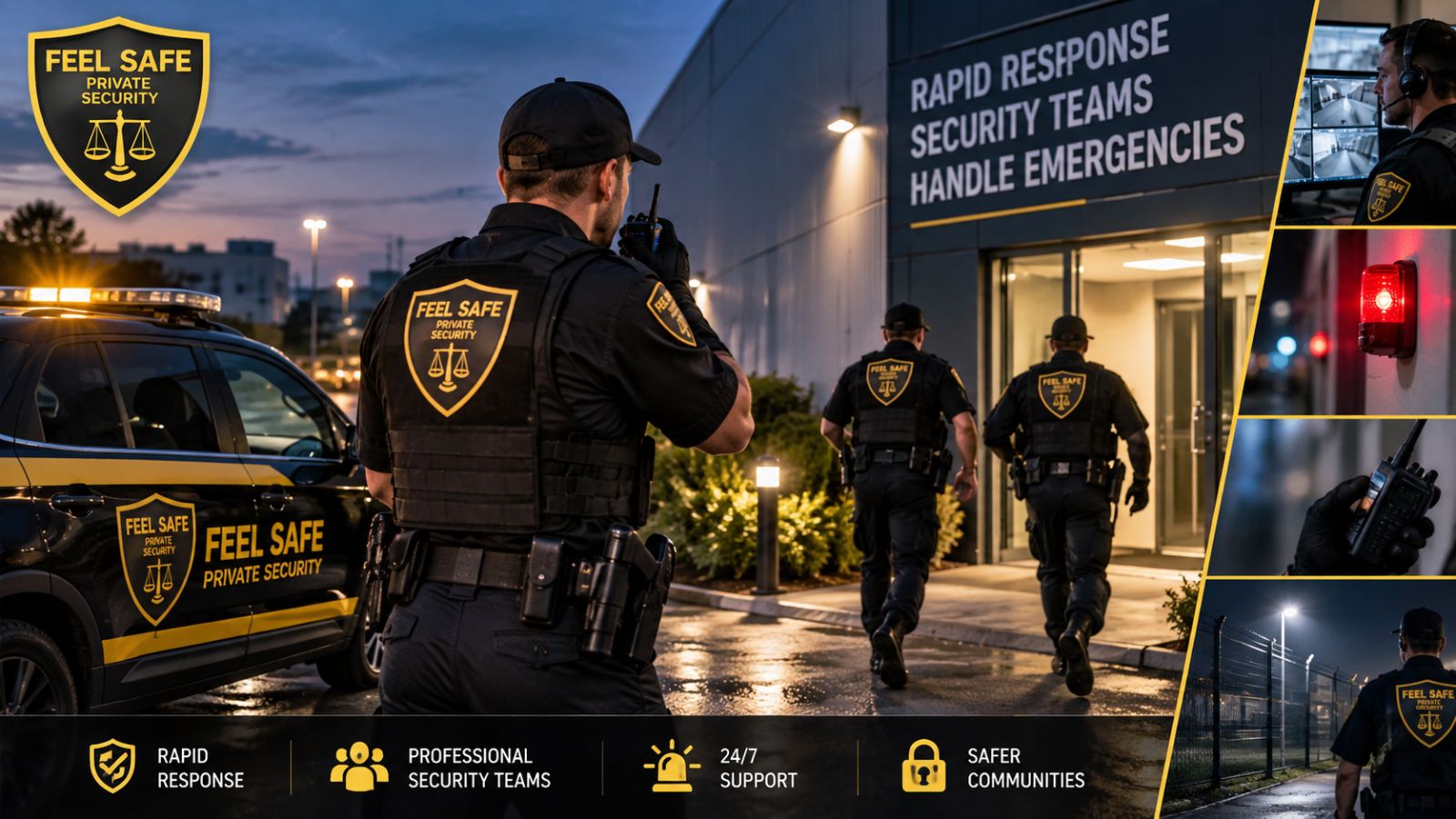
How Rapid Response Security Teams Handle Emergencies
Post Date: September 9, 2026, Post By: Admin
Emergencies can happen at any time. A break-in or a security alarm is common. During these events, every minute can matter. This is where rapid response security services in California can provide support. These services help with urgent security situations. They can help protect people, property, and sites.
A mobile security response services in California team is indispensable. It does more than travel to a location. The team usually
- receives the alert
- checks the information
- travels to the site
- looks for risks
- takes suitable action within its legal authority
The urgent security response guards in California first receive information about the incident.
What Is a Rapid Response Security Team?
Let’s understand what rapid response security teams do. Unlike routine patrols, these teams focus on urgent security concerns.
Fast response security services in California can respond when a site needs quick security support. A response may start after:
- An alarm activation
- A reported break-in
- Suspicious activity
- Unauthorized access
- Property damage
- Workplace security concerns
- A site emergency
The main goal is to check the situation and provide suitable on-site support. An emergency security response team in California may use mobile units to reach different locations quickly.
How Does Emergency Security Response Work?
A professional response usually follows several steps.
1. Receiving the Alert
First, the team receives information about the event.
The information may include the location, type of alarm, reported problem, and possible safety concerns.
Clear information helps the team understand the situation before arriving.
2. Assessing the Situation
The team reviews the information about the incident.
This may include the type of incident, location, time, and possible risks.
The team can then choose a suitable response.
3. Travelling to the Site
The mobile response team then travels to the site.
The travel time can vary. Traffic, weather, road conditions, and other active incidents can affect arrival time.
A security company should not promise a specific response time unless it can meet that promise.
4. Checking the Property
Once the team reaches the site, trained personnel check the visible conditions.
They may check suitable entry points, outside areas, gates, doors, and other agreed areas.
The team should always put personal safety first. Security personnel should not take unnecessary risks.
5. Taking Appropriate Action
The next step depends on what the team finds.
The team may secure an accessible area, record visible damage, contact the right emergency service, or follow the client’s agreed security procedure.
Call an emergency security response team in California. It should operate within its legal powers and company procedures.
Why Fast Response Matters
A slow response can let an incident continue. For example, a broken or unlocked door can create a security risk. A damaged gate can also give people another way to enter. An active alarm may need a quick check.
This is why mobile security response services in California can help properties that need security support after normal business hours. Security teams do not replace emergency services.
If there is an immediate danger to life, a fire, or another serious emergency, contact the right police, fire, or medical service. Security teams can help protect the site.
Mobile Security Response Services
Mobile security teams can cover different locations. A mobile unit can travel from one site to another. It can carry out planned patrols or respond to security alerts.
This can be useful for:
- Construction sites
- Commercial buildings
- Retail properties
- Warehouses
- Vacant properties
- Residential communities
- Business premises
The service can match the risks of a specific property. A site with repeated after-hours incidents may need a different plan from a low-risk office. Many incidents can happen outside normal business hours. A business that operates for 10 hours a day may need security support for the other 14 hours. The exact service can depend on the site, operating hours, alarm system, and level of risk. A clear schedule helps the security team understand when checks or responses may be needed.
Emergency Site Protection
A property may need temporary protection after an incident. For example, a damaged door or window can leave an entry point open.
Emergency site protection can help reduce the risk of unauthorized access. The exact service depends on the property and the security company’s agreed scope of work.
Handling a Security Alarm
Alarm activations are a common reason for urgent security attendance. An alarm does not always mean that a crime has happened.
It may result from:
- A system fault
- An authorized person
- A forgotten access code
- Environmental conditions
- An actual intrusion
A trained response team can attend the property and check its visible condition. If the team finds signs of forced entry or another serious issue, it can contact the appropriate authorities under the agreed procedure.
Incident Response Security
Good incident response security needs clear procedures. The response team should know what information to collect. It should also know which actions it can take. Documentation can also help after an incident.
A report may record:
- Date
- Time
- Location
- Reason for attendance
- Visible conditions
- Actions taken
- Relevant photographs or evidence
- Notifications made
The report format can vary between providers. Clear records can help property owners understand what happened. They can also help identify any follow-up work.
Quick Response Security Teams and Communication
Good communication is important during emergency response security. The team should receive clear information before travelling to the site. The client should also know what will happen after the team arrives.
The agreement may explain:
- Who receives incident updates
- When the client will receive a call
- What happens if there is damage
- When emergency services will be available
- How they provide reports
Clear communication can reduce confusion during a stressful event.
Crisis Security Management
A serious workplace issue, major property incident, or repeated security problem may need a wider plan. Crisis security management focuses on preparing for these situations.
A security provider may help clients plan for:
- Emergency contacts
- Site access
- Incident reporting
- Evacuation support
- Communication
- After-hours response
- Recovery procedures
Planning before an emergency can make the response easier to manage.
What Makes a Response Team Reliable?
Many factors matter when choosing a security organization. The team should have suitable training, clear procedures, proper insurance, and skilled staff.
Ask the rapid response security services in California about their:
- Security licenses
- Staff training
- Insurance
- Response procedures
- Communication process
- Reporting system
- Service coverage
- Experience with similar sites
Security work in California has specific rules. Clients should check that the provider and its personnel have the licenses and registrations required for the services they provide. Always check credentials instead of assuming they are in place.
Using Numbers to Plan Security Coverage
Numbers can help when planning security coverage. For example, a business may operate for 12 hours each day. It may then need security support during the other 12 hours.
A property with 3 separate buildings may also need a different patrol plan from a single office. The number of gates, doors, access points, employees, visitors, and vehicles can also affect the security plan.
There is no single staffing number that works for every property. A professional assessment should consider the actual property and its risks. Feel Safe Private Security is a renowned security provider that can help you with security coverage.
Preparing Before an Emergency Happens
The best time to plan emergency procedures is before an incident happens. Keep important site information up to date.
This may include:
- Property address
- Site contact details
- Emergency contacts
- Access instructions
- Alarm information
- Gate or lock details
- Restricted areas
- Important site hazards
Tell the emergency security provider when any information changes. An old access code or wrong contact number can slow communication during an incident.
Final Thoughts: Mobile Security Response Services in California
Emergencies need a clear and organized response. Rapid response security services in California can help businesses and property owners manage urgent security concerns. Services may include mobile attendance, site checks, incident reports, and agreed response procedures. The service should match the property’s actual needs.
A good plan should explain how people will respond, how they will communicate, what actions they can take, and when they should call emergency services. Urgent security response guards in California can provide useful support. Proper training, legal procedures, communication, and clear records also matter.
Before hiring fast response security services in California, check their licenses, insurance, experience, service area, and response procedures. Good preparation can make an emergency easier to manage. Feel Safe Private Security is a renowned security provider that you can contact.
FAQs
1. What does a rapid response security team do?
The rapid response team comes for emergencies. Depending on the situation, employees check the site, follow security procedures, record details, and contact emergency services when needed.
2. When should I use emergency security services?
They can help after an alarm activation, break-in, property damage, trespassing, or another urgent security issue. Report any immediate threat to life to the proper emergency service.
3. How quickly can a security team arrive?
Response times can vary. Distance, traffic, weather, road conditions, and other active incidents can affect arrival. Ask the provider about its expected response time.
4. Can mobile security teams protect vacant properties?
Yes, mobile response services can support some vacant properties. The service may include scheduled patrols or responses after an alert or incident, based on the agreed contract.
5. What should I check before hiring a security company in California?
Check the company’s licenses, experience, staff qualifications, insurance, and service coverage. Also ask about response procedures and reporting.
Book Your Services
Our Blog
- How Rapid Response Security Teams Handle Emergencies
- Security Challenges in Parking Lots and Retail Centers
- Why Shopping Centers Need Professional Security Guards
- How Fast Should a Security Team Respond? A Guide to Rapid Response Security Services in California
- Event Security Planning Guide for Safe Gatherings
- Benefits of Residential Security Guards for Community Safety
- How to Choose the Best Security Guard Company in California
- Why 24 Hour Security Monitoring Is Important for Businesses
- Why Hospitals and Clinics Need Professional Security Services
- Why Apartment Complexes Need Residential Security Guards
- Hospital Security Services in California
- How Commercial Security Guards in California Protect Business Properties
- Top Security Risks in Commercial Buildings and Offices
- Why Nightclubs Need Professional Security Guards
- The Role of Unarmed Security Guards in Workplace Safety
- Armed vs Unarmed Security Guards: Which One Is Right for Your Business
- When Businesses Should Hire Armed Security Guards
- How to Choose the Best Unarmed Security Guard Company in California
- How to Choose the Best Security Guard Company in California
- Why Banks Need Professional Security Guards
- Why Businesses Hire Professional Security Guard Services in California
- Top Security Risks in Commercial Buildings and Offices
- Benefits of Hiring Licensed Security Officers for Businesses
- Top Reasons Businesses Need Armed Security Guards in California
- Why Hiring Professional Security Officers in California Is Essential for Businesses
- What Makes a Professional Security Guard Company in California Reliable?
- Top Benefits of Hiring Armed Security Guards in California
- How Professional Bank Security Guards Prevent Robbery and Fraud
- Why Rely On Event Security Services for Crowd Control at California Events
- Strengthening Community Protection Through Reliable Home Security in Tracy Approaches
- How a Bank Security Officer in Manteca Protects What Matters Most to You
- Why a Private Security Guard Is Essential for Business and Community Safety
- Safe Home Security Stockton – Trusted Protection for Your Family and Property
- Choosing the Right Security Guard Services in Modesto for Your Needs
- Why Our Security Services Tracy Are the First Choice for Local Protection
- Stay Protected With Our Expert Event Security Guards Manteca for Every Occasion
- Top Security Companies Lodi Trusts for Bank and Guard Protection Services
- Protecting What Matters Most with Security Services Stockton You Can Trust
- Improving The Security Of A Shopping Mall
- What To Ask Before Hiring A Security Officer?
- Duties Of An Enhanced Security Officer