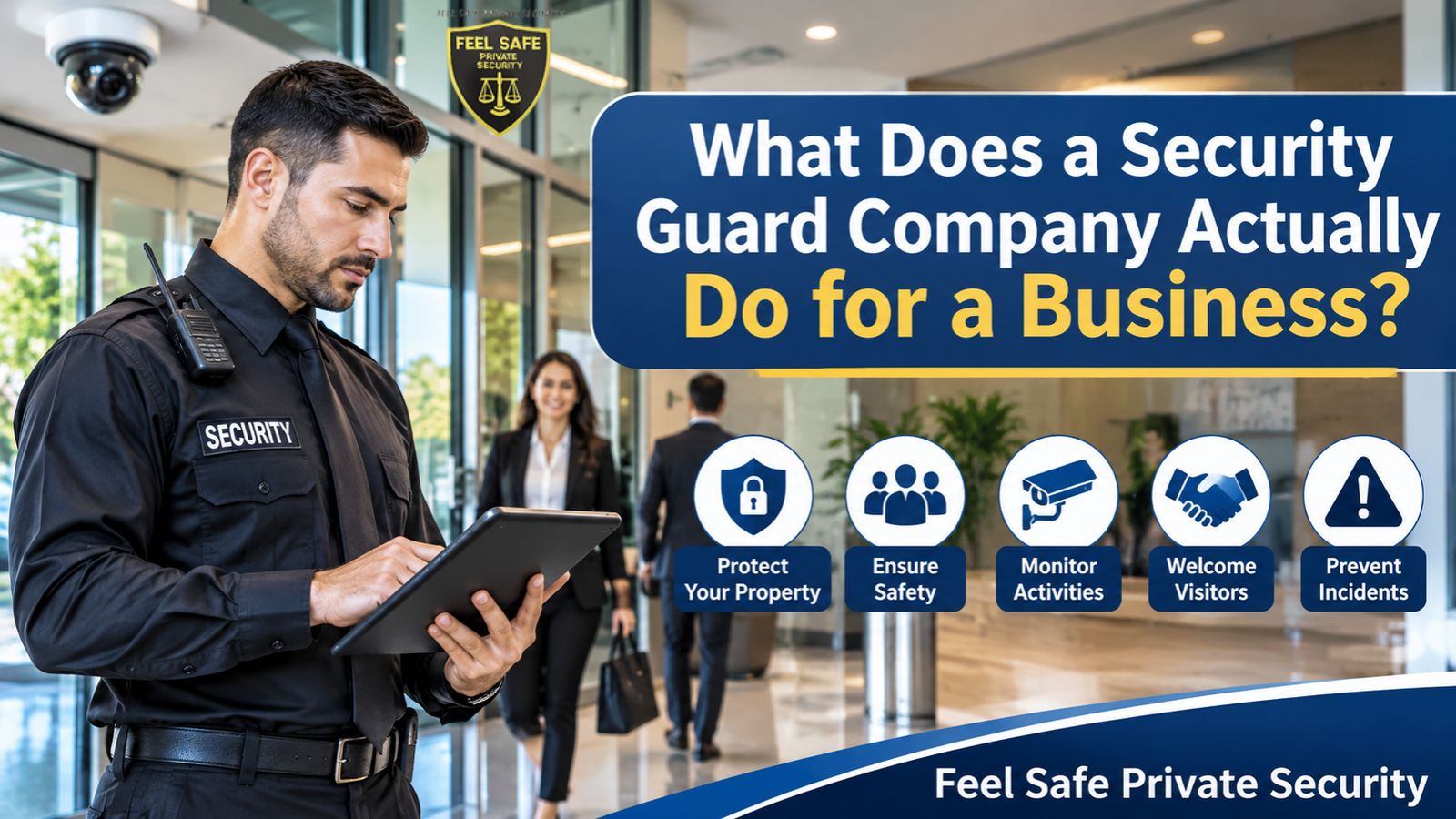
What Does a Security Guard Company Actually Do for a Business?
Post Date: November 12, 2026, Post By: Admin
A property manager signs a security contract and expects a guard to stand at the door. Then the first weekly report arrives. In a single shift, the officer stopped a stranger from slipping in behind staff, flagged a broken lock and calmed an argument in the parking lot. Surprises like this are common. Many owners ask one simple question before they sign: What Does a Security Guard Company Actually Do?
The short answer is that a good company prevents problems, responds to incidents and documents everything. A trusted security guard company in California also handles licensing, training, supervision and scheduling, so owners can focus on running their business.
The details matter. A professional security company California businesses respect does far more than fill a post with a uniform.
This guide breaks down the real work, from daily duties to behind-the-scenes management, so you know what to expect from licensed security services California providers offer. It draws on the field experience of the Feel Safe Private Security team.
The Quick Answer: Core Jobs of a Security Company
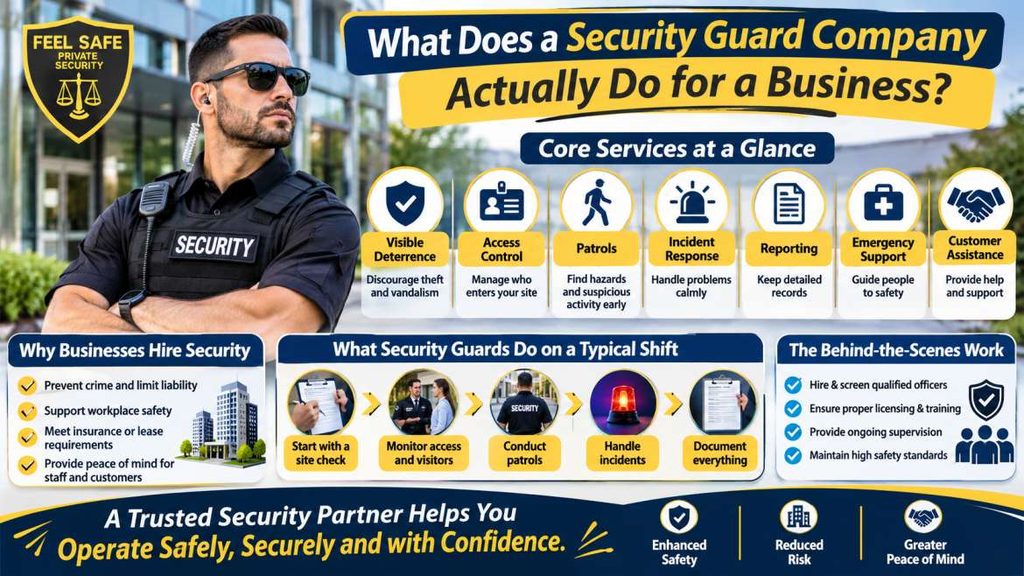
Here is a simple overview of the main services a reliable provider delivers.
| Service | What It Means | How It Helps Your Business |
|---|---|---|
| Visible deterrence | Uniformed officers on site | Discourages theft, trespassing and vandalism |
| Access control | Checking who enters and where | Stops strangers from reaching staff areas |
| Patrols | Regular walks through the property | Finds hazards and suspicious activity early |
| Incident response | Calm action when problems happen | Protects people and limits damage |
| Reporting | Written records of every incident | Supports police, insurance and legal needs |
| Emergency support | Help during fires, medical events or evacuations | Guides people to safety quickly |
| Customer assistance | Directions, escorts and friendly help | Improves the visitor experience |
The Background: Why Businesses Hire Security Guards
California treats private security as a regulated profession. Every guard needs a state guard registration, which requires a fingerprint background check and training in the power to arrest and the appropriate use of force. Officers then complete further skills training and continuing education every year. Companies that provide guards must also hold their own state license and confirm that every officer they place holds a valid registration.
Businesses usually hire security for a clear reason. Some face repeated theft or trespassing. Others want to support their workplace violence prevention plan, meet insurance or lease requirements or simply give staff and customers more peace of mind. Whatever the reason, the right company turns that concern into a practical plan.
What Security Guards Do on a Typical Shift
Start of Shift: Briefing and Site Check
A good shift starts before the officer takes the post. The officer reads notes from the previous shift, checks for open issues and walks the site to confirm doors, gates and lights work properly. This quick check often catches problems such as a propped exit door or a broken camera before anyone else notices them.
Access Control and Visitor Management
At offices, warehouses and clinics, officers decide who gets in. They check badges, sign in visitors and stop tailgating, which happens when someone follows an employee through a secure door. This one duty prevents many thefts and unwanted encounters, because most problems start with someone who should not be inside.
Patrols and Hazard Spotting
Officers walk parking lots, hallways, loading docks and stairwells on a varied schedule. They look for suspicious people, but they also report safety hazards like spills, blocked exits and poor lighting. Many owners are surprised by how many maintenance and safety issues their officers catch on routine patrols.
Handling Incidents Calmly
When trouble starts, a trained officer works to lower the tension rather than raise it. They speak calmly, separate people in a dispute and ask unwelcome visitors to leave on the owner’s behalf. If a situation turns serious, they call police and keep others at a safe distance. Their goal is safety, not confrontation.
Reports and Handover
Every shift ends with clear documentation. Officers record incidents, unusual activity and maintenance concerns, then brief the next officer. These reports give owners a real picture of what happens on their property, and they become valuable evidence if an insurance claim or legal issue comes up later.
The Behind-the-Scenes Work of a Security Company
Much of the value comes from work that owners never see. A reliable security guard company in California manages people, quality and risk so the client does not have to.
Hiring, Screening and Licensing
A licensed security services California provider verifies every officer’s registration, checks backgrounds and tracks renewal and training dates. Armed officers need an additional firearm permit and regular range qualification. The company keeps these records current, which protects your business from the risks of an unlicensed or lapsed guard.
Training for Your Specific Site
General training is only the starting point. A good company writes post orders for your site, explaining who may enter, how to handle shoplifters, where emergency exits are and when to call police. New officers learn the site before they work it alone, which leads to faster and better decisions.
Supervision and Quality Checks
Supervisors visit sites, review reports and coach officers. They make sure officers stay alert, follow post orders and treat people with respect. This oversight separates dependable providers from companies that simply send a person and disappear.
Scheduling and Backup Coverage
Officers get sick, take leave and change jobs. A professional security company California clients trust keeps trained backup officers ready, so your post never sits empty. The company handles scheduling, payroll and staffing, which removes a major burden from the business owner.
Security Protection Services by Business Type
Different businesses need different security protection services. Here is how the work changes by setting.
- Retail stores: Officers deter shoplifting through visible presence and greet shoppers at the door. They follow store policy on theft and avoid risky chases. They also watch for aggressive customers and help staff feel safer during busy periods.
- Corporate offices: Officers focus on access control, visitor sign-in and lobby safety. They manage deliveries, spot tailgating and respond to disputes, giving visitors a professional first impression.
- Healthcare clinics: Calm communication matters most here. Officers support staff when patients or visitors become upset, which protects both care teams and the people they serve.
- Construction sites: Patrols target theft of tools, materials and equipment, especially after crews leave. Officers also report unsafe conditions and unauthorized visitors.
- Residential properties: Officers handle trespassing, parking issues and resident concerns. Their presence makes residents feel safer walking through common areas.
A Real-World Style Example
Picture a warehouse that keeps losing tools from its yard. The owner hires a security company, and the officer’s first reports show that a back fence section is loose and two lights stay dark. The officer also records the same vehicle parking nearby on several nights. The owner repairs the fence and lights and shares the vehicle details with police. The losses stop, mostly because of observation and reporting rather than any confrontation.
Common Misconceptions About Security Companies
“Guards act like police.” Private officers have the same arrest powers as any private person. They cannot search people at will or enforce laws like police officers. Their strength lies in prevention, observation and quick reporting.
“A guard is just a body at the door.” Good officers patrol, report hazards, assist visitors and document everything. A passive guard who stays on the phone is a warning sign about the company’s management.
“Security replaces locks and cameras.” Officers work best alongside good locks, lighting and cameras. Each layer supports the others.
“One guard can cover any property.” Large sites may need more than one post, patrols or added technology. Coverage should match your size and risk.
Pro Tips for Getting the Most From Your Security Guards
- Share your real problems at the start. Tell the company about past incidents, problem areas and staff concerns. Honest details lead to a smarter plan and better officer placement.
- Look beyond distance. When you search for a security provider near me, closeness matters less than licensing, training, supervision and reporting quality.
- Read the reports. Patterns in reports reveal weak spots, repeat visitors and maintenance needs. Owners who read them get far more value from their security.
- Treat the officer as part of the team. Introduce officers to staff and include them in safety meetings. Officers who know your people spot unusual activity faster.
- Review the plan regularly. Your risks change as your business grows. Ask your provider to review coverage and post orders whenever something changes.
How Feel Safe Private Security Supports Businesses
Feel Safe Private Security starts each assignment with an honest look at the property, its people and its daily challenges. Our officers are licensed, carefully screened and trained in de-escalation, customer service and clear reporting. Supervisors stay involved, so the protection stays consistent from shift to shift
Conclusion
So, What Does a Security Guard Company Actually Do? It prevents problems through visible presence, controls access, patrols for risks, responds calmly to incidents and documents everything.
Behind the scenes, a strong security guard company in California also handles licensing, training, supervision and backup coverage.
When you compare providers, look for a professional security company California businesses trust for clear communication and reliable reporting.
Choose licensed security services California owners can verify, and the protection will fit your site, your staff and your customers. If you are exploring your options, Feel Safe Private Security is ready to talk through your needs.
Frequently Asked Questions
1. What does a security guard company do that an in-house guard cannot?
A security company handles licensing checks, training, supervision, scheduling and backup coverage. With an in-house guard, the business owner manages all of that personally. If an in-house guard calls in sick, the post often sits empty. A company can send a trained replacement. It also brings experience from many sites, so its officers recognize common risks faster and follow proven procedures for incidents, reporting and emergency response.
2. How do I know if a security guard company in California is properly licensed?
Ask the company for its license number and the guard registration numbers of the officers assigned to your site. You can then verify them through the state licensing bureau’s public lookup tool. A trustworthy provider shares these details openly and keeps them current. Also confirm that armed officers hold a valid firearm permit. Checking credentials takes only a few minutes and protects your business from serious liability risks.
3. Do security guards write reports for every incident?
Professional officers should document every incident, plus unusual activity and safety hazards they notice. Good reports explain what happened, who was involved and what actions the officer took. These records help police investigations, support insurance claims and show owners patterns over time. If a provider cannot show you sample reports or describe its reporting process clearly, treat that as a warning sign about its overall quality and management.
4. Can a security company help with workplace violence prevention?
Yes. Trained officers support prevention plans by watching for warning signs, managing access to the building and calming tense situations before they escalate. They also document concerning behavior, which helps managers respond early. Officers work best as one part of a wider plan that includes staff training, clear reporting steps and emergency procedures. A good security company helps you connect these pieces so your team knows how to respond.
5. What should I look for in licensed security services California businesses can trust?
Look for verified licensing, careful screening and site-specific training. Supervision matters too, so ask how often supervisors visit and review reports. Strong providers explain how they handle callouts, how officers communicate with your managers and how they adjust coverage as your risks change. A professional security company California owners rely on will answer these questions clearly and recommend coverage that fits your real needs, not the biggest package possible.
Book Your Services
Our Blog
- What Does a Security Guard Company Actually Do for a Business?
- Unarmed Security Guards in California: Are They Enough to Protect Your Business?
- Why California Banks Still Need Armed Security Guards in 2026
- How Security Guards Help Prevent Retail Theft and Shoplifting in California
- How Unarmed Security Guards in California Help Prevent Theft and Improve Workplace Safety
- Why Hospitality Businesses Need Professional Security Guards
- Security Solutions for Hotels and Retail Stores
- What to Expect From Rapid Response Security Services in California
- How Rapid Response Security Teams Handle Emergencies
- Security Challenges in Parking Lots and Retail Centers
- Why Shopping Centers Need Professional Security Guards
- How Fast Should a Security Team Respond? A Guide to Rapid Response Security Services in California
- Event Security Planning Guide for Safe Gatherings
- Benefits of Residential Security Guards for Community Safety
- How to Choose the Best Security Guard Company in California
- Why 24 Hour Security Monitoring Is Important for Businesses
- Why Hospitals and Clinics Need Professional Security Services
- Why Apartment Complexes Need Residential Security Guards
- Hospital Security Services in California
- How Commercial Security Guards in California Protect Business Properties
- Top Security Risks in Commercial Buildings and Offices
- Why Nightclubs Need Professional Security Guards
- The Role of Unarmed Security Guards in Workplace Safety
- Armed vs Unarmed Security Guards: Which One Is Right for Your Business
- When Businesses Should Hire Armed Security Guards
- How to Choose the Best Unarmed Security Guard Company in California
- How to Choose the Best Security Guard Company in California
- Why Banks Need Professional Security Guards
- Why Businesses Hire Professional Security Guard Services in California
- Top Security Risks in Commercial Buildings and Offices
- Benefits of Hiring Licensed Security Officers for Businesses
- Top Reasons Businesses Need Armed Security Guards in California
- Why Hiring Professional Security Officers in California Is Essential for Businesses
- What Makes a Professional Security Guard Company in California Reliable?
- Top Benefits of Hiring Armed Security Guards in California
- How Professional Bank Security Guards Prevent Robbery and Fraud
- Why Rely On Event Security Services for Crowd Control at California Events
- Strengthening Community Protection Through Reliable Home Security in Tracy Approaches
- How a Bank Security Officer in Manteca Protects What Matters Most to You
- Why a Private Security Guard Is Essential for Business and Community Safety
- Safe Home Security Stockton – Trusted Protection for Your Family and Property
- Choosing the Right Security Guard Services in Modesto for Your Needs
- Why Our Security Services Tracy Are the First Choice for Local Protection
- Stay Protected With Our Expert Event Security Guards Manteca for Every Occasion
- Top Security Companies Lodi Trusts for Bank and Guard Protection Services
- Protecting What Matters Most with Security Services Stockton You Can Trust
- Improving The Security Of A Shopping Mall
- What To Ask Before Hiring A Security Officer?
- Duties Of An Enhanced Security Officer