Unarmed Security Guards in California: Are They Enough to Protect Your Business?
Post Date: November 4, 2026, Post By: Admin
A store manager sees the same group hanging around the entrance every evening. A clinic receptionist faces an angry visitor twice a week. In an office lobby, strangers slip in behind employees at the door. None of these problems calls for a weapon. Each one calls for a trained person who watches, speaks up and acts early. That is the daily work of unarmed security guards in California.
Many owners still ask an honest question: is an unarmed officer really Enough to Protect Your Business, or does real safety require an armed guard?
The answer depends on your actual risks, not on assumptions. Office towers and business parks often choose corporate unarmed security California teams because they need control and calm, not force.
This guide explains what unarmed officers can and cannot do, where they work best and when you need more. It will help you decide whether to hire unarmed guards California businesses can trust. The advice comes from the field experience of the Feel Safe Private Security team.
What Unarmed Security Guards Do in California
An unarmed officer is a licensed guard who works without a firearm. In California, every guard needs a state guard registration, usually called a guard card. Applicants pass a fingerprint background check. Before they work a post, they also complete training on the power to arrest and the appropriate use of force. After that, they finish further skills training and complete continuing education every year.
An unarmed guard’s legal powers match those of a private person. They can observe, report, ask people to leave private property on the owner’s behalf and, in limited situations, make a citizen’s arrest. They cannot search people at will, use more force than the law allows or act like police officers. Good officers know these limits well, and that knowledge protects your business from liability.
Daily Duties You Can Expect
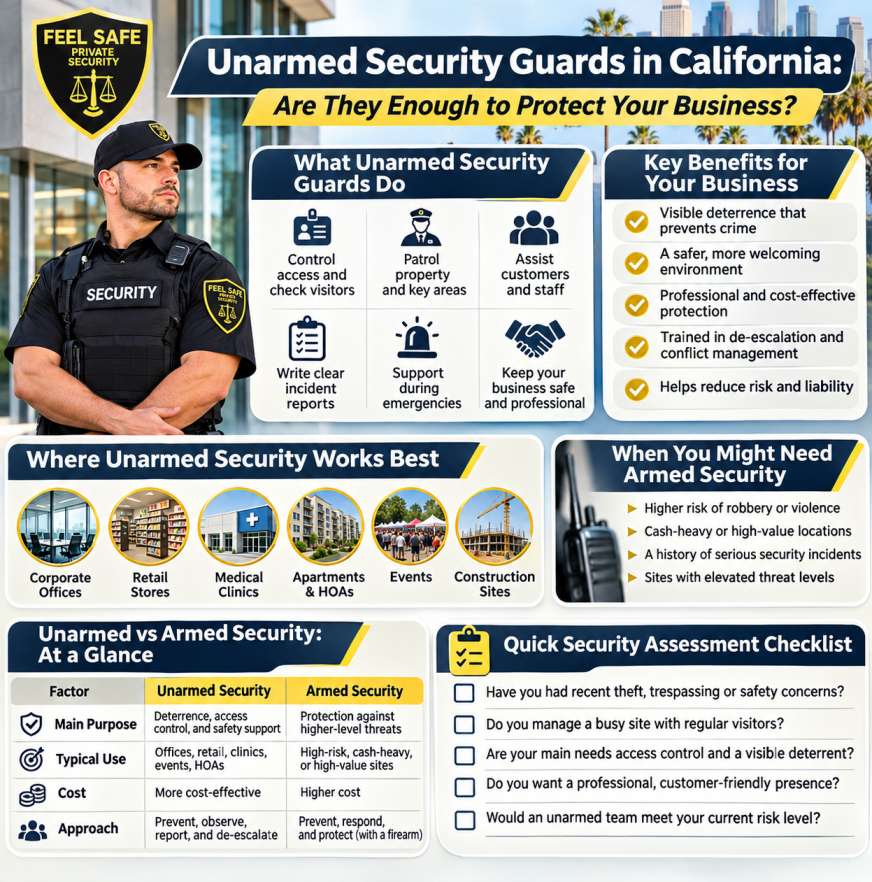
- Access control: The officer checks who enters staff areas, loading docks and restricted floors. This stops tailgating, which is one of the most common ways strangers get into offices.
- Patrols: Regular walks through parking lots, hallways and stairwells reveal broken locks, propped doors and suspicious activity before they turn into bigger problems.
- Customer assistance: Officers give directions, help elderly visitors and answer simple questions. This friendly role makes the officer approachable rather than intimidating.
- Incident reports: Clear written records support police reports, insurance claims and your internal reviews. Strong reports often matter long after the incident ends.
- Emergency support: During a fire alarm, medical emergency or power failure, the officer calls for help, guides people to exits and keeps paths clear for first responders.
Why Visible Deterrence Guards Work So Well
Most crime is opportunistic. Thieves, vandals and trespassers look for places where no one is watching. A uniformed officer at the door changes that decision quickly. A person thinking about shoplifting or slipping into a staff area usually walks away and tries somewhere else. Visible deterrence guards create this effect without a weapon. Presence, eye contact and a friendly greeting send a clear message.
The Power of a Simple Greeting
Experienced officers greet almost everyone who walks in. Honest customers feel welcome. People with bad intentions feel noticed, and being noticed is the last thing they want. This small habit prevents more trouble than many cameras or alarms. It also supports a warm brand image, which matters in retail, hospitality and healthcare.
Where Guard Services Are Enough to Protect Your Business
Unarmed coverage fits a wide range of California businesses. The table below shows how common business types match up.
| Business Type | Common Risks | Is Unarmed Coverage a Good Fit? |
|---|---|---|
| Corporate offices | Tailgating, trespassing, workplace disputes | Strong fit |
| Retail stores | Shoplifting, aggressive customers | Strong fit for most stores |
| Medical clinics | Upset visitors, workplace violence | Strong fit with de-escalation skills |
| Apartments and HOAs | Trespassing, vandalism, parking issues | Strong fit |
| Events | Crowd flow, intoxicated guests | Good fit with enough staff |
| Construction sites | Theft of tools and materials | Good fit with patrols and lighting |
| Cash-heavy or high-value sites | Armed robbery | Often needs armed coverage |
Corporate Offices and Business Parks
Many companies choose corporate unarmed security California teams for lobbies and business parks. The main risks there are tailgating, unknown visitors and the occasional heated dispute between employees. A front-desk officer checks badges, signs in guests and keeps an eye on entrances. Employees feel safer, and visitors get a professional first impression.
Retail Stores and Customer Safety Security
In retail, strong customer safety security means more than stopping theft. Officers watch for slip hazards, help lost children find their parents and calm arguments at the checkout. They also follow your store’s policy on shoplifters, so staff never need to chase anyone. Trained officers know when to observe and report instead of stepping in physically, which keeps everyone safer.
Healthcare and Front-Desk Settings
Clinics and medical offices often see stressed, worried or angry visitors. An unarmed officer trained in de-escalation fits this setting well. A calm voice and patient listening can settle most tense moments. Patients feel protected, and staff can focus on care instead of conflict.
When Unarmed Security Guards May Not Be Enough
Honest advice includes limits. Some sites face risks that unarmed coverage cannot fully handle. These include businesses that handle large amounts of cash, stores that sell high-value goods, sites with a history of armed incidents and isolated locations at night. In these cases, an armed officer may be the safer choice for certain posts or certain parts of the day.
Even then, unarmed security guards in California still play a valuable role. Many businesses use a hybrid plan. Unarmed officers manage customer areas and access points, while armed coverage protects cash handling or the highest-risk hours. This approach balances safety with a welcoming atmosphere.
A Real-World Style Example
Picture an electronics store in a busy shopping center. The store faces regular shoplifting and once had an attempted robbery at closing. An unarmed officer works the entrance during the day, greets shoppers and cuts shoplifting through visible presence. For closing and bank deposit runs, the store adds armed coverage. The result is a friendly shopping floor with extra protection only where the risk is highest.
Practical Tips Before You Hire Unarmed Security
Before you hire unarmed guards California providers offer, plan the role carefully. A clear plan helps the officer succeed from the first shift.
- Start with a risk assessment. List your real problems, such as theft, trespassing, disputes or after-hours break-ins. The assessment shows whether unarmed coverage fits and where officers should stand.
- Verify every license. Ask your provider for guard registration and company license numbers. You can check them through the state licensing bureau’s public lookup tool. A trustworthy company shares this information without hesitation.
- Ask about de-escalation training. Talking skills matter more than physical skills for unarmed work. Ask how the company trains officers to calm tense situations and how often they refresh that training.
- Write clear post orders. Post orders tell the officer exactly what to do: who may enter, how to handle shoplifters and when to call police. Clear orders prevent confusion during stressful moments.
- Plan communication. Decide how staff will contact the officer and how the officer will report problems to managers. Quick, simple communication speeds up every response.
Common Myths About Unarmed Security Guards
“Unarmed means powerless.” Unarmed officers prevent most incidents through presence, observation and communication. Their main job is prevention, not combat.
“Criminals ignore unarmed guards.” Most offenders avoid any place where someone is watching closely. A uniform and alert eyes are a strong deterrent on their own.
“Any guard can work any site.” A hospital lobby and a construction yard need different skills. Site-specific training makes a big difference in how well an officer performs.
“One guard can cover everything.” Large properties often need patrols, more than one post or support from cameras. Coverage should match the size and layout of the site.
“Cameras can replace guards.” Cameras record events, but they cannot greet visitors, calm an argument or guide people out during an emergency.
Pro Tips From Experienced Guard Services Teams
- Place the officer where decisions happen. The best position is usually near the main entrance or where people choose where to go next. From there, the officer sees more and deters more.
- Teach staff how to call for help. Employees should know how to reach the officer quickly and discreetly. A simple code word or radio call saves valuable seconds.
- Vary patrol timing. Predictable rounds help offenders plan. Changing routes and timing keeps the site less predictable.
- Review incidents together. After any incident, the manager and the officer should talk about what worked and what to change. Small adjustments build stronger protection over time.
- Treat the officer as part of the team. Officers who know your staff and routines spot unusual activity faster and respond with better judgment.
How Feel Safe Private Security Approaches Unarmed Coverage
Feel Safe Private Security starts every assignment with an honest look at the property, the people and the daily challenges. Our team recommends unarmed coverage where it fits, and we say so clearly when a site needs more. Our officers are licensed, screened and trained in de-escalation, customer service and clear reporting.
Conclusion
So, are unarmed officers Enough to Protect Your Business? For most offices, stores, clinics and residential properties, the answer is yes, provided the officers are licensed, well trained and placed with a clear plan. For cash-heavy or high-risk sites, a hybrid plan often works best.
The right unarmed security guards in California prevent problems early, support your staff and keep customers comfortable. Start with a risk assessment, verify licenses and set clear post orders.
If you are comparing corporate unarmed security California options or getting ready to hire unarmed guards California businesses can rely on, Feel Safe Private Security can help you build a plan that fits your site and your people.
Frequently Asked Questions
1. Can unarmed security guards in California detain someone?
Unarmed guards have the same arrest powers as any private person under California law. They can make a citizen’s arrest in limited situations, such as when they see a crime happen in front of them. However, detaining someone carries legal risk, so most professional companies train officers to observe, report and call police whenever possible. Your post orders should explain clearly when an officer may step in and when they should only watch and report.
2. Are unarmed guards effective against shoplifting?
Yes, especially as a deterrent. Most shoplifters look for stores where no one is paying attention. An unarmed officer at the entrance who greets every shopper makes would-be thieves feel noticed, and many leave without trying anything. Officers also watch high-theft areas and support staff with clear reporting. For the best results, combine officer presence with good store layout, staff awareness and a written policy on how to handle suspected theft.
3. What training do unarmed guards need in California?
Every unarmed guard needs a state guard registration. To earn it, they pass a fingerprint background check and complete training on the power to arrest and the appropriate use of force before working a post. After registration, they complete additional security skills training and continuing education every year. Reputable companies add site-specific training, de-escalation practice and report-writing skills, so officers are ready for the real situations your business faces, not just the basics.
4. How do I know if my business needs armed or unarmed security?
Start with a professional risk assessment. Look at your incident history, the cash or high-value goods you keep on site, your location and your operating hours. Most offices, clinics, retail stores and apartment communities do well with unarmed coverage. Businesses with heavy cash handling or a history of armed incidents may need armed officers for certain posts or hours. A good provider explains the reasons behind its recommendation rather than simply selling the bigger option.
5. What should I look for when I hire unarmed guards in California?
Look for a provider that shares license numbers openly, trains officers in de-escalation and gives clear incident reports. Ask how the company supervises officers, handles replacements and prepares guards for your specific site. Strong communication matters too, so confirm how officers will report problems to your managers. The best corporate unarmed security California providers also review your needs regularly and adjust coverage as your business and its risks change over time.
Book Your Services
Our Blog
- Unarmed Security Guards in California: Are They Enough to Protect Your Business?
- Why California Banks Still Need Armed Security Guards in 2026
- How Security Guards Help Prevent Retail Theft and Shoplifting in California
- How Unarmed Security Guards in California Help Prevent Theft and Improve Workplace Safety
- Why Hospitality Businesses Need Professional Security Guards
- Security Solutions for Hotels and Retail Stores
- What to Expect From Rapid Response Security Services in California
- How Rapid Response Security Teams Handle Emergencies
- Security Challenges in Parking Lots and Retail Centers
- Why Shopping Centers Need Professional Security Guards
- How Fast Should a Security Team Respond? A Guide to Rapid Response Security Services in California
- Event Security Planning Guide for Safe Gatherings
- Benefits of Residential Security Guards for Community Safety
- How to Choose the Best Security Guard Company in California
- Why 24 Hour Security Monitoring Is Important for Businesses
- Why Hospitals and Clinics Need Professional Security Services
- Why Apartment Complexes Need Residential Security Guards
- Hospital Security Services in California
- How Commercial Security Guards in California Protect Business Properties
- Top Security Risks in Commercial Buildings and Offices
- Why Nightclubs Need Professional Security Guards
- The Role of Unarmed Security Guards in Workplace Safety
- Armed vs Unarmed Security Guards: Which One Is Right for Your Business
- When Businesses Should Hire Armed Security Guards
- How to Choose the Best Unarmed Security Guard Company in California
- How to Choose the Best Security Guard Company in California
- Why Banks Need Professional Security Guards
- Why Businesses Hire Professional Security Guard Services in California
- Top Security Risks in Commercial Buildings and Offices
- Benefits of Hiring Licensed Security Officers for Businesses
- Top Reasons Businesses Need Armed Security Guards in California
- Why Hiring Professional Security Officers in California Is Essential for Businesses
- What Makes a Professional Security Guard Company in California Reliable?
- Top Benefits of Hiring Armed Security Guards in California
- How Professional Bank Security Guards Prevent Robbery and Fraud
- Why Rely On Event Security Services for Crowd Control at California Events
- Strengthening Community Protection Through Reliable Home Security in Tracy Approaches
- How a Bank Security Officer in Manteca Protects What Matters Most to You
- Why a Private Security Guard Is Essential for Business and Community Safety
- Safe Home Security Stockton – Trusted Protection for Your Family and Property
- Choosing the Right Security Guard Services in Modesto for Your Needs
- Why Our Security Services Tracy Are the First Choice for Local Protection
- Stay Protected With Our Expert Event Security Guards Manteca for Every Occasion
- Top Security Companies Lodi Trusts for Bank and Guard Protection Services
- Protecting What Matters Most with Security Services Stockton You Can Trust
- Improving The Security Of A Shopping Mall
- What To Ask Before Hiring A Security Officer?
- Duties Of An Enhanced Security Officer