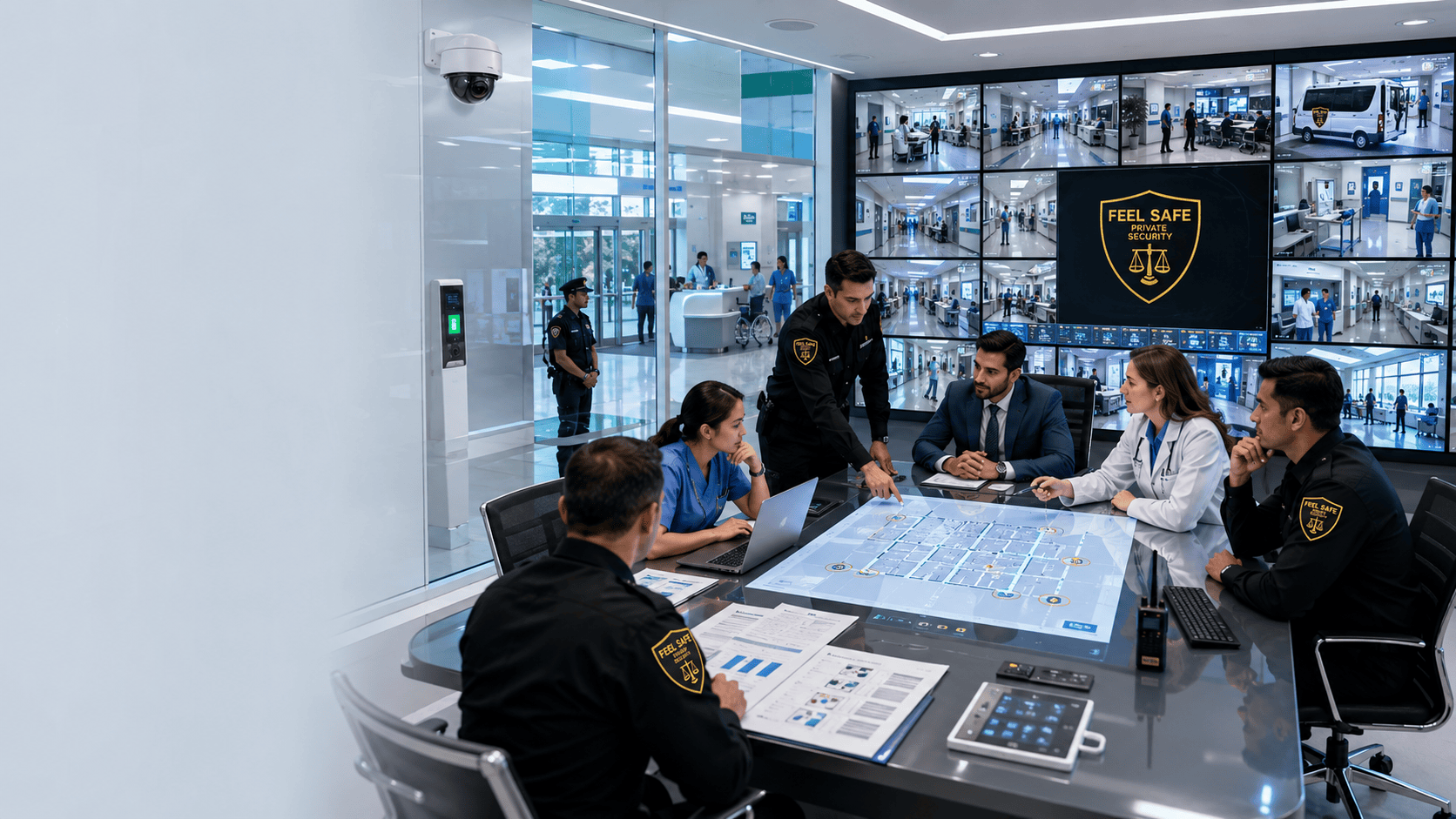
Hospital Security Services in California
Post Date: June 30, 2026, Post By: Admin
While hospitals exist to help people get better, there are unique security challenges that no other workplace faces. Every single day, thousands of patients, visitors, contractors, first responders, and staff come through hospitals’ doors. However, while most of those who visit are doing so for benign reasons, hospitals need to be prepared for situations in which aggression, theft, illegal entry, family conflicts, and other medical-related emergencies can occur. It is because of those reasons that hospital security in California has become indispensable today. Hospital security services in California are to be discussed
Healthcare workers have the highest risk of workplace violence out of all occupations. According to the U.S. Bureau of Labor Statistics (BLS), the majority of non-fatal injuries sustained in workplace violence incidents that led to days away from work were sustained by healthcare and social assistance workers at around 73% of such cases. Furthermore, according to OSHA, workplace violence is five times more likely to happen to a healthcare worker than to any other worker in any other industry. Healthcare facility security guards in California can really ensure the safety of the hospital.
Security Challenges in the Field of Health Care
A lot of security risks appear when we talk about health care facilities because these places are open for all 24 hours a day. Emergency rooms, outpatient centers, pharmacies, and behavioral health units face different kinds of emotionally charged cases in which people are angry or agitated.
Office buildings are closed by the end of the workday, but hospitals are open 24/7. In this case, there are a lot of situations which are happening anytime. Professional medical facility security companies in California know how to detect early signs of aggression and prevent security incidents.
Protecting Health Care Workers from Workplace Violence
In this field, doctors and nurses have to work under great pressure. They often face verbal and physical threats made by angry and violent patients who suffer from mental problems, drug use, pain, or other reasons. Imagine that you are in the emergency department of the hospital in the late Friday evening.
Imagine the hectic environment in an emergency room on a Friday night. The ambulances keep coming in, and anxious family members fill up the waiting areas. An angry patient starts yelling at the receptionists because of the delays he/she is experiencing. In the absence of trained security officers, things could easily erupt into violence.
The presence of trained security guards for hospitals in California ensures that the angry patient is handled professionally using de-escalation tactics. This ensures that the healthcare workers focus on providing services to the patients.
Better Patient Protection
Patient safety does not only involve medical safety; it is about ensuring that these vulnerable people are protected from any kind of harm that may come to them in the hospital.
Some of the services provided by hospital security include protection of:
- Pediatric wings
- Labor wards
- Intensive care units
- Mental facilities
- Pharmacy
- Medical records
- Restricted treatment rooms
As an illustration, maternity wards usually employ controlled access mechanisms together with security personnel to ensure that babies are not kidnapped from the hospital. The security personnel will confirm the identities of the visitors and watch out for any unauthorized movement that triggers the alarm system. The following measures give comfort to the families at a time when they are supposed to be happy.
Visitor Access Management in Clinic Security Services in California
The hospitals have numerous visitors on a daily basis. Although visitors are critical in the recovery process of patients, their free access is not safe. Professional clinic security services in California incorporate visitor access control processes that enable only those who are allowed to visit certain parts of the clinics to gain access.
The security personnel can:
- Confirm the identity of the visitors.
- Provide badges to the visitors.
- Control restricted entries.
- Implement visiting hours.
- Manage crowds during emergencies.
Prevention of Theft and Loss of Property
Hospitals are full of expensive medical equipment, expensive drugs, sensitive patient data, and personal items. Without proper security systems in place, they can be easy prey for thieves.
Expensive medical instruments, including portable ultrasound equipment, laptops, tablets, and other sophisticated devices, may cost thousands of dollars. In addition, prescription drugs found in hospital pharmacies need additional security because of their value. Professional hospital security guards in California do frequent patrolling, monitor cameras, investigate suspicious activity, and decrease the risk of theft before losses can happen.
Emergency Support
Hospital security staff often act like first responders in case of emergencies in hospitals. They can react to alarms about fires, active threats, missing patients, and adverse weather conditions. Their task is to cooperate with the hospital staff and emergency workers to make the response well-coordinated.
Suppose a regional hospital faces an unexpected power outage due to adverse weather. After the generators turn on all the necessary equipment, security guards secure all the doors, direct emergency vehicles, move patients, and keep order throughout the building. Their efforts let clinicians focus on treatment while operations are being secured.
De-escalation Is an Important Skill
In today’s hospitals, security is never about instilling fear into anyone. In today’s times, there is specific training provided for hospital security personnel related to communication, conflict resolution, crisis intervention, and behavioral awareness.
Rather than relying on the use of physical intervention in resolving an issue, most times, the issue can be sorted out by communication, empathy, and effective communication. For example, when an older patient with dementia becomes confused and tries to exit a secure area, the security guard will collaborate with the nurses and redirect the patient in a gentle way without any humiliation. These kinds of skills have now become equally important as the old school security skills.
Improving Compliance and Risk Management
Healthcare institutions must operate under strict regulatory requirements. The security programs ensure compliance with standards of workplace safety, emergency readiness, and privacy.
A typical hospital security program includes:
- Incident reporting
- Documentation of access control
- Emergency preparedness planning
- Conducting security audits
- Training of employees on security
- Surveillance monitoring
Documentation is also very helpful in investigating incidents and legal claims.
Benefits of Visible Security Staff
Visible security guards help to ensure physical safety as well as provide perception of safety. For example, patients coming to hospitals under pressure find their visit much easier when they have visible professional security people who can direct them and help in any way possible.
Medical staff members also feel better when there are trained security guards available for dealing with aggressive behavior or other security issues. Thus, security ensures not only safety but patient and staff satisfaction.
Selecting Hospital Security Services
Not every security company understands the specifics of healthcare institutions. While choosing hospital security services in California, the healthcare organization should pay attention to security companies that have experience operating in medical institutions and possess qualified officers who know how to manage potential risks.
It is essential that these companies have such qualities as:
- Experience in providing healthcare security services
- Certified and licensed security officers
- De-escalation and crisis intervention skills
- HIPAA requirements knowledge
- Emergency responses 24/7
- Advanced surveillance and reporting technologies
- Effective communication with healthcare staff members
This kind of collaboration results in a safer environment and effective emergency preparation of hospitals.
Security Beyond Conventional Scope
In terms of technology, healthcare security keeps evolving. Today, many California hospitals integrate trained security officers with surveillance systems, electronic access control, visitor management, alarm systems, and real-time incident reporting.
Technology does not replace officers; rather, it enables them to be more efficient through quick response and better situation analysis. With healthcare facilities becoming more and more complicated, integrated security measures ensure enhanced security and patient experience at the same time.
Conclusion: Healthcare Facility Security Guards in California
A hospital is the place where one should receive compassionate and life-saving treatment, but in order to provide top-notch healthcare, one needs to ensure safety and security. Protection from workplace violence, securing vulnerable patients, emergency management, and protection of valuable medical equipment are just some of the tasks handled by professional hospital security companies in California. Professional healthcare facility security guards in California know that hospital security is much more than presence at the entrance. If you are looking for medical facility security in California, you can get in touch with Feel Safe Private Security.
FAQS
1. What reasons make a hospital require professional security services?
There are several security issues specific to hospitals: it is a workplace violence, theft, trespassing, and emergency situations. Security provides protection of patients, hospital staff, visitors, and healthcare assets.
2. What is the role of hospital security guards?
The role of a hospital security guard includes monitoring entrance points, patrols, controlling visitors, responding to emergencies, de-escalating conflicts, evacuations, assistance in evacuation, and working together with healthcare workers in case of security incidents.
3. Are healthcare professionals under threat of workplace violence?
Yes, they are. OSHA and U.S. Bureau of Labor Statistics reports state that healthcare workers have a much higher percentage of workplace violence than any other workers in various sectors.
4. Which departments in hospitals are in great need of security services?
Emergency departments, maternity, pediatric, pharmacy, intensive care units, behavioral health units, and data centers are in greater need of security measures.
5. How does healthcare security provide patient safety?
Security officers prevent unauthorized persons from accessing the facility, control visitors, respond to emergencies, protect vulnerable patients, and create an atmosphere that allows providing quality care.
Book Your Services
Our Blog
- Why Hospitality Businesses Need Professional Security Guards
- Security Solutions for Hotels and Retail Stores
- What to Expect From Rapid Response Security Services in California
- How Rapid Response Security Teams Handle Emergencies
- Security Challenges in Parking Lots and Retail Centers
- Why Shopping Centers Need Professional Security Guards
- How Fast Should a Security Team Respond? A Guide to Rapid Response Security Services in California
- Event Security Planning Guide for Safe Gatherings
- Benefits of Residential Security Guards for Community Safety
- How to Choose the Best Security Guard Company in California
- Why 24 Hour Security Monitoring Is Important for Businesses
- Why Hospitals and Clinics Need Professional Security Services
- Why Apartment Complexes Need Residential Security Guards
- Hospital Security Services in California
- How Commercial Security Guards in California Protect Business Properties
- Top Security Risks in Commercial Buildings and Offices
- Why Nightclubs Need Professional Security Guards
- The Role of Unarmed Security Guards in Workplace Safety
- Armed vs Unarmed Security Guards: Which One Is Right for Your Business
- When Businesses Should Hire Armed Security Guards
- How to Choose the Best Unarmed Security Guard Company in California
- How to Choose the Best Security Guard Company in California
- Why Banks Need Professional Security Guards
- Why Businesses Hire Professional Security Guard Services in California
- Top Security Risks in Commercial Buildings and Offices
- Benefits of Hiring Licensed Security Officers for Businesses
- Top Reasons Businesses Need Armed Security Guards in California
- Why Hiring Professional Security Officers in California Is Essential for Businesses
- What Makes a Professional Security Guard Company in California Reliable?
- Top Benefits of Hiring Armed Security Guards in California
- How Professional Bank Security Guards Prevent Robbery and Fraud
- Why Rely On Event Security Services for Crowd Control at California Events
- Strengthening Community Protection Through Reliable Home Security in Tracy Approaches
- How a Bank Security Officer in Manteca Protects What Matters Most to You
- Why a Private Security Guard Is Essential for Business and Community Safety
- Safe Home Security Stockton – Trusted Protection for Your Family and Property
- Choosing the Right Security Guard Services in Modesto for Your Needs
- Why Our Security Services Tracy Are the First Choice for Local Protection
- Stay Protected With Our Expert Event Security Guards Manteca for Every Occasion
- Top Security Companies Lodi Trusts for Bank and Guard Protection Services
- Protecting What Matters Most with Security Services Stockton You Can Trust
- Improving The Security Of A Shopping Mall
- What To Ask Before Hiring A Security Officer?
- Duties Of An Enhanced Security Officer