
Why California Banks Still Need Armed Security Guards in 2026
Post Date: October 26, 2026, Post By: Admin
A teller counts the morning cash drawer. A man walks in with his hood up and asks a few vague questions about opening an account. He leaves after two minutes. Three days later, he comes back with a weapon. Scenes like this still play out across the state, and they show why California Banks Still Need Armed Security in 2026.
Many people think bank robbery belongs in old movies. Digital banking has grown and cash use has dropped. Yet branches still hold cash, ATMs still stand on busy streets, and staff still unlock doors before sunrise. Criminals know all of this, so the need for security guards for banks California has not faded.
This guide explains how bank security services in California work today. It shows where armed officers add real value and how branch leaders can plan protection that matches their actual risk. It comes from the field view of Feel Safe Private Security officers who stand at branch doors every day.
The Current State of Bank Security in California
California remains one of the busiest states for bank crime. Federal bank crime reports place it among the top states every year. Dense metro areas, a large number of branches and fast freeway access give offenders many options. Urban branches also face more incidents than quiet suburban ones.
The threats have also changed shape. Note-passing robberies still happen. But criminal groups now attack ATMs with skimmers, cutting tools and malware. Some target cash deliveries. Others scout a branch first, posing as customers to study the layout, the exits and staff routines.
Banks have responded with cameras, alarms, time-lock safes and cash recyclers. These tools help. None of them, however, can step in, calm an angry person or guide staff to safety in real time. Trained officers fill that gap.
Why California Banks Still Need Armed Security Guards Today
Visible Deterrence Stops Crime Before It Starts
Most robbers choose easy targets. They look for branches with no guard, poor sightlines and slow response. An armed officer at the entrance changes that picture within seconds. Many offenders walk past a protected branch and never return. Preventing an incident is always better than responding to one.
Faster Control During Violent Incidents
Police response takes time, even in big cities. During those minutes, staff and customers face the danger alone. A licensed armed officer can secure the lobby, guide people to safe areas and give police clear details when they arrive. The officer’s goal is safety and control, not a fight.
Protection During High-Risk Windows
Risk is not spread evenly across the day. Opening, closing, vault access and cash deliveries create short windows when cash sits exposed. Armed officers cover these moments, so staff can focus on their tasks rather than watching the parking lot.
Confidence for Staff and Customers
Tellers who feel safe make better decisions. When a trained officer stands nearby, employees stay calmer, follow procedures and handle tense customers with more confidence. Customers notice it too, and many prefer branches where they can see someone protecting them.
How Financial Security Reaches Beyond the Teller Counter
Modern financial security covers much more than the lobby. A strong plan protects every point where cash, data or people face risk.
ATM Security Services That Close the Gap
ATMs run around the clock and often sit in quiet corners. Criminals fit skimmers, attack machines with tools or rob customers at the screen. Good ATM security services combine patrol checks, lighting reviews, camera monitoring and fast reporting of tampered machines. During patrols, officers check card readers and report anything that looks loose or out of place.
Cash-in-Transit and Vault Protection
Cash moves between vaults, ATMs and armored vehicles many times each week. Each transfer creates an exposure point. Armed officers secure the route between the vehicle and the vault, watch for anyone following the crew and keep the public at a safe distance.
Workplace Violence Prevention Support
California requires most employers to keep a written workplace violence prevention plan, and public-facing bank branches fall under this rule. Trained officers support that plan in practical ways. They spot warning signs, calm disputes and record incidents accurately, which helps the bank meet its duties.
Armed vs Unarmed: Choosing the Right Bank Security Model
Not every branch needs the same setup. Choose the officer type based on the branch’s real risk level, not on habit or assumption.
| Factor | Armed Officer | Unarmed Officer |
|---|---|---|
| Best fit | High-cash, urban or previously targeted branches | Lower-cash, suburban or advisory-only branches |
| Deterrence level | Strong | Moderate |
| Armed threat response | Can protect lives until police arrive | Observes, reports and guides evacuation |
| State licensing | Guard registration plus a firearm permit | Guard registration |
| Core training | Firearms, de-escalation, use-of-force law | De-escalation, customer service, reporting |
| Customer impression | Strong reassurance in high-crime areas | Friendly, approachable presence |
A proper risk assessment should guide this choice. Feel Safe Private Security reviews crime history, cash volume, building layout, foot traffic and nearby incidents before recommending a model. Some branches need armed coverage all day. Others need it only during cash handling or late hours.
Practical Financial Risk Prevention Strategies for Branch Leaders
Smart financial risk prevention combines people, procedures and technology. These steps make a measurable difference:
- Run a yearly site risk assessment. Walk the branch with your security team and look at it the way an offender would. Check blind spots, weak doors, dark parking areas and predictable routines. Update the plan whenever the layout or the neighborhood changes.
- Train staff with realistic drills. Policies on paper do not help in a crisis. Short, regular drills teach tellers how to stay calm, follow robbery protocols and protect themselves. Practice builds habits that hold under stress.
- Control entry points. Limit side and staff doors, and keep them locked. Make sure your officer can see the main entrance and the teller line from one position. Clear sightlines stop many problems early.
- Brief your officer daily. Share planned cash deliveries, staff changes and any concerns from the day before. A guard who knows the day’s plan can spot what looks out of place.
- Report suspicious visits. Repeated vague questions, people photographing the interior or loitering near the ATM can signal scouting. Log the details and share them with your security provider and local police.
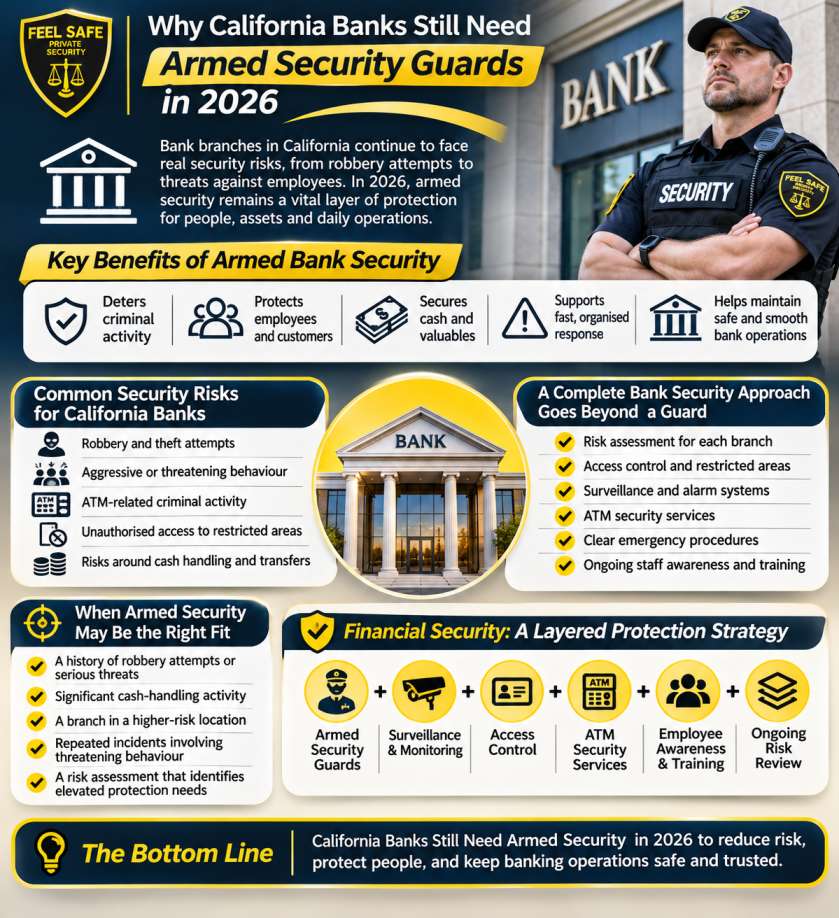
Common Mistakes and Misconceptions in Bank Security
“Cameras are enough.” Cameras record crime, but they rarely stop it. Footage helps investigators after the event, while a trained officer can stop the event from happening.
“Armed guards make branches feel hostile.” Professional officers greet customers, answer questions and help people with mobility needs. Done well, armed protection feels welcoming and safe, not threatening.
“Any licensed guard can work a bank.” Bank posts need specific skills, including cash-handling awareness, robbery response and calm communication. General guard experience alone does not cover these needs.
“Robbery only happens in big cities.” Smaller towns and freeway-side branches also face incidents, partly because offenders expect weaker protection there.
“Choosing the lowest bid saves money.” Poorly trained officers raise liability and risk. Value comes from training, supervision and reliable reporting.
Expert Advice From the Field
Strong bank security services in California start with communication, not just presence. Here is a typical scenario. A visitor comes into a plaza branch three times in one week and each time asks vague questions about closing times. The officer notes his description and behavior, then informs the branch manager. The manager alerts local police. The visits stop. No weapon was drawn and no one was hurt, because the officer was paying attention.
Our officers follow these field-tested habits:
- Position for vision, not comfort. Stand where you can see the door, the teller line and the lobby at once. A good position deters offenders and speeds up your response.
- Vary patrol patterns. Predictable rounds help offenders plan. Changing routes and timing keeps would-be criminals guessing.
- Learn staff duress signals. Every branch should have a quiet signal that tellers can use. Officers must know it and react to it right away.
- Write clear reports. Accurate, timely reports help police, support insurance claims and improve the next risk review.
How Feel Safe Private Security Supports Bank Security
Feel Safe Private Security builds bank protection around each branch’s real risk. Our approach includes licensed armed and unarmed officers, site risk assessments, ATM patrol support, cash-handling escort and detailed incident reporting. We train our officers for bank settings, with a focus on calm judgment, customer care and safe response. Our goal is simple: staff go home safe, and customers feel confident walking through the door.
Conclusion
Cash, customers and staff still make bank branches a target, which is why California Banks Still Need Armed Security this year. Technology helps, but trained people make the real difference when a situation turns tense.
The right bank security services in California combine visible deterrence, smart procedures and officers who understand banking risks. Start with an honest risk assessment, match the guard type to that risk and keep communication strong.
If your branch is reviewing its protection plan, Feel Safe Private Security can help you choose the right security guards for banks California branches can rely on, with a plan that fits your location and your people.
Frequently Asked Questions
1. Do all California bank branches need armed security guards?
No, not every branch needs armed officers. The right choice depends on cash volume, location, crime history and branch layout. A downtown branch with high cash flow and past incidents usually benefits from armed coverage. A small advisory branch with little cash may only need an unarmed officer. A professional risk assessment helps you decide, so you avoid both overspending and dangerous gaps in protection.
2. What licenses do armed bank security guards need in California?
Armed officers in California must hold a state guard registration and a valid firearm permit. To get these, they complete required training hours, pass background checks and qualify on the range regularly. Reputable security companies also add bank-specific training on robbery response, de-escalation and use-of-force law. Always ask your provider to confirm that every officer assigned to your branch holds current, valid credentials before they start work.
3. How do ATM security services protect customers?
ATM security services cover both the machine and the people using it. Officers check card readers for skimmers, report damage or tampering and watch for loitering near the screen. Patrols also review lighting and camera angles, since dark ATM areas attract crime. Many banks add patrols at night when foot traffic drops. Together, these steps reduce fraud, protect cash and help customers feel safe using the machine.
4. Can armed guards make customers feel uncomfortable?
Poorly trained guards can, but professional officers rarely do. Good bank officers greet people, answer simple questions and help customers find the right desk. They stay alert without acting aggressive. In our experience, most customers feel more relaxed when they see a calm, trained officer at the door. The key is choosing a provider that trains officers in customer service as well as security skills.
5. How often should a bank review its security plan?
A bank should review its security plan at least once a year. It should also review it after any incident, renovation, staffing change or rise in local crime. Threats change quickly, especially at ATMs and during cash transfers. A regular review keeps camera coverage, officer posts and staff procedures up to date. Strong financial risk prevention depends on treating security as an ongoing process, not a one-time setup.
Book Your Services
Our Blog
- Why California Banks Still Need Armed Security Guards in 2026
- How Security Guards Help Prevent Retail Theft and Shoplifting in California
- How Unarmed Security Guards in California Help Prevent Theft and Improve Workplace Safety
- Why Hospitality Businesses Need Professional Security Guards
- Security Solutions for Hotels and Retail Stores
- What to Expect From Rapid Response Security Services in California
- How Rapid Response Security Teams Handle Emergencies
- Security Challenges in Parking Lots and Retail Centers
- Why Shopping Centers Need Professional Security Guards
- How Fast Should a Security Team Respond? A Guide to Rapid Response Security Services in California
- Event Security Planning Guide for Safe Gatherings
- Benefits of Residential Security Guards for Community Safety
- How to Choose the Best Security Guard Company in California
- Why 24 Hour Security Monitoring Is Important for Businesses
- Why Hospitals and Clinics Need Professional Security Services
- Why Apartment Complexes Need Residential Security Guards
- Hospital Security Services in California
- How Commercial Security Guards in California Protect Business Properties
- Top Security Risks in Commercial Buildings and Offices
- Why Nightclubs Need Professional Security Guards
- The Role of Unarmed Security Guards in Workplace Safety
- Armed vs Unarmed Security Guards: Which One Is Right for Your Business
- When Businesses Should Hire Armed Security Guards
- How to Choose the Best Unarmed Security Guard Company in California
- How to Choose the Best Security Guard Company in California
- Why Banks Need Professional Security Guards
- Why Businesses Hire Professional Security Guard Services in California
- Top Security Risks in Commercial Buildings and Offices
- Benefits of Hiring Licensed Security Officers for Businesses
- Top Reasons Businesses Need Armed Security Guards in California
- Why Hiring Professional Security Officers in California Is Essential for Businesses
- What Makes a Professional Security Guard Company in California Reliable?
- Top Benefits of Hiring Armed Security Guards in California
- How Professional Bank Security Guards Prevent Robbery and Fraud
- Why Rely On Event Security Services for Crowd Control at California Events
- Strengthening Community Protection Through Reliable Home Security in Tracy Approaches
- How a Bank Security Officer in Manteca Protects What Matters Most to You
- Why a Private Security Guard Is Essential for Business and Community Safety
- Safe Home Security Stockton – Trusted Protection for Your Family and Property
- Choosing the Right Security Guard Services in Modesto for Your Needs
- Why Our Security Services Tracy Are the First Choice for Local Protection
- Stay Protected With Our Expert Event Security Guards Manteca for Every Occasion
- Top Security Companies Lodi Trusts for Bank and Guard Protection Services
- Protecting What Matters Most with Security Services Stockton You Can Trust
- Improving The Security Of A Shopping Mall
- What To Ask Before Hiring A Security Officer?
- Duties Of An Enhanced Security Officer