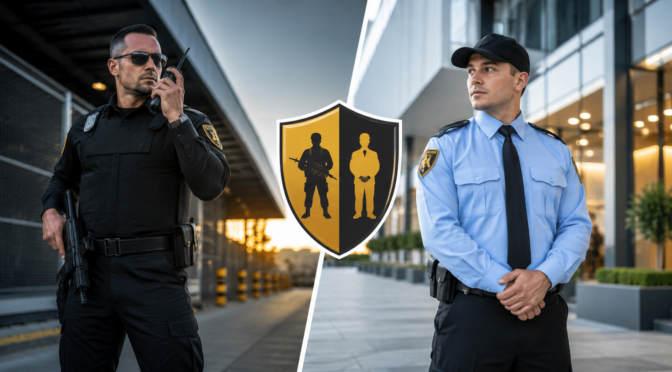
Choosing between armed security guards in California and unarmed personnel is not just a budgeting decision—it’s a risk assessment decision that directly affects safety, liability, and business continuity. Many business owners only realize the importance of this choice after an incident occurs, which is often too late.
This guide breaks down the real-world differences between armed and unarmed security, when each is appropriate, and how to evaluate what your business truly needs. The goal is to help you make a confident, informed decision based on practical risk—not assumptions.
Understanding the Role of Security in Modern Business
Security today is no longer just about standing at a door or watching cameras. Threats have evolved—ranging from organized theft and workplace violence to infrastructure sabotage and emergency response gaps.
Businesses now rely on layered protection strategies that may include:
- Physical deterrence through guards
- Surveillance systems
- Access control systems
- Emergency response protocols
- On-site patrol coverage
Within this system, both licensed armed security officers California and Unarmed Security Guards play important but very different roles.
Understanding where each fits is the foundation of building an effective security plan.
Armed Security Guards in California: When Higher Protection Is Required
Businesses typically consider armed security guards in California when the risk level exceeds what standard deterrence can manage.
Armed guards are trained professionals licensed to carry firearms and respond to high-threat situations. Their presence is both preventive and responsive.
Situations Where Armed Security Makes Sense
In real-world practice, armed protection is often recommended in environments such as:
- Cash-intensive operations (banks, casinos, large retail chains)
- High-value inventory storage facilities
- Late-night businesses in high-crime areas
- Logistics hubs and transport depots
- Sensitive corporate or government-adjacent sites
In these environments, armed protection services California provide not only deterrence but also immediate response capability if a threat escalates.
Understanding Risk-Based Deployment
Security professionals don’t assign armed personnel randomly. The decision is based on a structured risk evaluation.
Key Risk Indicators
- History of theft or attempted break-ins
- Exposure to armed robbery threats
- High-value assets stored on-site
- Limited police response time in the area
- Public-facing operations with unpredictable traffic
When these factors combine, armed security guards in California become a practical necessity rather than an optional upgrade.
When Unarmed Security Guards Are the Better Choice
Not every situation requires firearms or high-level tactical response. In fact, in many environments, Unarmed Security Guards are the more appropriate, cost-effective, and customer-friendly option.
Unarmed guards focus on:
- Access control
- Monitoring CCTV systems
- Visitor management
- Incident reporting
- Conflict de-escalation
Ideal Use Cases for Unarmed Security
- Corporate offices
- Residential complexes
- Schools and educational campuses
- Retail stores with low theft risk
- Medical clinics and reception areas
In these environments, visibility and communication matter more than force response.
The Real Difference in Capability
The distinction between armed and unarmed personnel is not just weapons—it’s training, responsibility, and legal authority.
| Factor | Armed Guards | Unarmed Guards |
|---|---|---|
| Response Level | High-risk intervention | De-escalation & reporting |
| Threat Handling | Armed threat response | Non-violent conflict resolution |
| Deterrence | Very high | Moderate |
| Risk Environment | High-risk security protection | Low to medium risk |
| Cost | Higher | Lower |
This is why professional armed guards California are typically assigned only after a detailed site evaluation.
Where It Becomes Essential
Certain industries cannot rely solely on passive security measures.
1. Critical Infrastructure Protection
Facilities like power stations, water systems, and communication hubs require critical infrastructure protection strategies. Any disruption can impact entire communities.
Here, armed personnel help prevent sabotage, unauthorized access, and coordinated threats.
2. Emergency Response Security
In situations where threats escalate quickly, response time is everything.
Emergency response security teams trained for armed deployment can:
- Contain active threats
- Secure evacuation routes
- Coordinate with law enforcement
- Stabilize high-risk incidents
This is especially important in large commercial environments or public-facing facilities.
3. Armed Facility Security
Certain properties require continuous armed oversight due to asset sensitivity.
Examples include:
- High-value warehouses
- Data centers
- Financial storage facilities
- Government-related infrastructure
This level of armed facility security is designed to prevent both internal and external threats.
Mobile Protection Strategy
Unlike static guards, armed patrol security services California involve mobile units that monitor multiple points within a property or district.
This approach is effective because:
- It reduces blind spots
- Increases unpredictability for potential intruders
- Improves rapid response coverage
- Enhances perimeter control
Security patrol systems are often used in large industrial zones or multi-building campuses.
Practical Insights from Field Experience
Security planning is not theoretical—it is based on real incidents, patterns, and response outcomes.
Visibility Alone Can Deter Crime
In many cases, simply having trained personnel on-site reduces attempted incidents by a significant margin.
Response Time Matters More Than Equipment
Cameras record incidents—but guards prevent escalation in real time.
Hybrid Security Models Work Best
Many businesses use a combination of armed and unarmed personnel depending on zones within the same property.
For example:
- Unarmed guards at entry points
- Armed guards for perimeter patrol or high-value zones
Common Mistakes Businesses Make
1. Choosing Based Only on Budget
Selecting unarmed security purely to save costs often leads to higher losses in high-risk environments.
2. Misjudging Risk Level
Businesses often underestimate how quickly their risk profile can change due to location, growth, or public exposure.
3. Over-reliance on Technology
Security systems are important, but they cannot physically intervene during an incident.
4. Ignoring Licensing and Compliance
Only properly vetted licensed armed security officers California should be deployed in armed roles.
Expert Advice: How to Choose the Right Option
Security experts typically recommend a structured evaluation:
Step 1: Conduct a Risk Assessment
Identify threats, vulnerabilities, and asset value.
Step 2: Analyze Incident History
Review past security incidents or near-misses.
Step 3: Evaluate Environment
Consider surrounding crime rates, accessibility, and visibility.
Step 4: Match Security Type to Risk Level
- Low risk → Unarmed Security Guards
- Medium risk → Hybrid model
- High risk → Armed deployment
At this stage, providers like Feel Safe Private Security typically design a customized solution based on operational needs rather than generic packages.
Why Movement-Based Protection Matters
Static security has limitations. Security patrol systems add a dynamic layer that improves coverage.
Benefits include:
- Unpredictable monitoring routes
- Faster detection of suspicious activity
- Broader property coverage
- Improved deterrence in large areas
This is particularly effective for warehouses, industrial parks, and multi-entry facilities.
Final Comparison:
The decision ultimately depends on risk, not preference.
- Choose Unarmed Security Guards when safety needs focus on monitoring, customer interaction, and low-risk environments.
- Choose armed security guards in California when threats involve theft, violence risk, or critical asset protection.
Both roles are essential in modern security planning—but they serve very different purposes.
Conclusion
The choice between armed and unarmed security is not about which is “better,” but which is appropriate for your environment.
Businesses dealing with high risk security protection, sensitive infrastructure, or emergency exposure often require armed personnel. Others operate effectively with unarmed guards supported by systems and protocols.
The key is accurate risk assessment and professional guidance. With the right strategy, businesses can achieve strong protection, operational continuity, and peace of mind without unnecessary costs or gaps in coverage.
FAQs
1. When should a business hire armed security guards in California?
A business should consider armed security guards in California when there is a credible risk of theft, violence, or protection of high-value assets. This includes cash-heavy operations, warehouses, and high-risk zones.
2. Are Unarmed Security Guards enough for most businesses?
Yes, in low-risk environments like offices, clinics, and residential buildings, Unarmed Security Guards are usually sufficient. They focus on prevention, monitoring, and de-escalation.
3. What is the main difference between armed and unarmed security?
The key difference is response capability. Armed guards can respond to high-threat situations, while unarmed guards focus on observation, reporting, and conflict prevention.
4. Do armed guards improve emergency response security?
Yes. Emergency response security is significantly enhanced with armed personnel because they can respond immediately to escalating threats before law enforcement arrives.
5. What is included in armed patrol security services California?
Armed patrol security services California typically include mobile surveillance, perimeter checks, rapid response coverage, and continuous monitoring of large or high-risk properties.